The Projection Parent: When Love Becomes the Blind Spot
Projection Parent (noun)
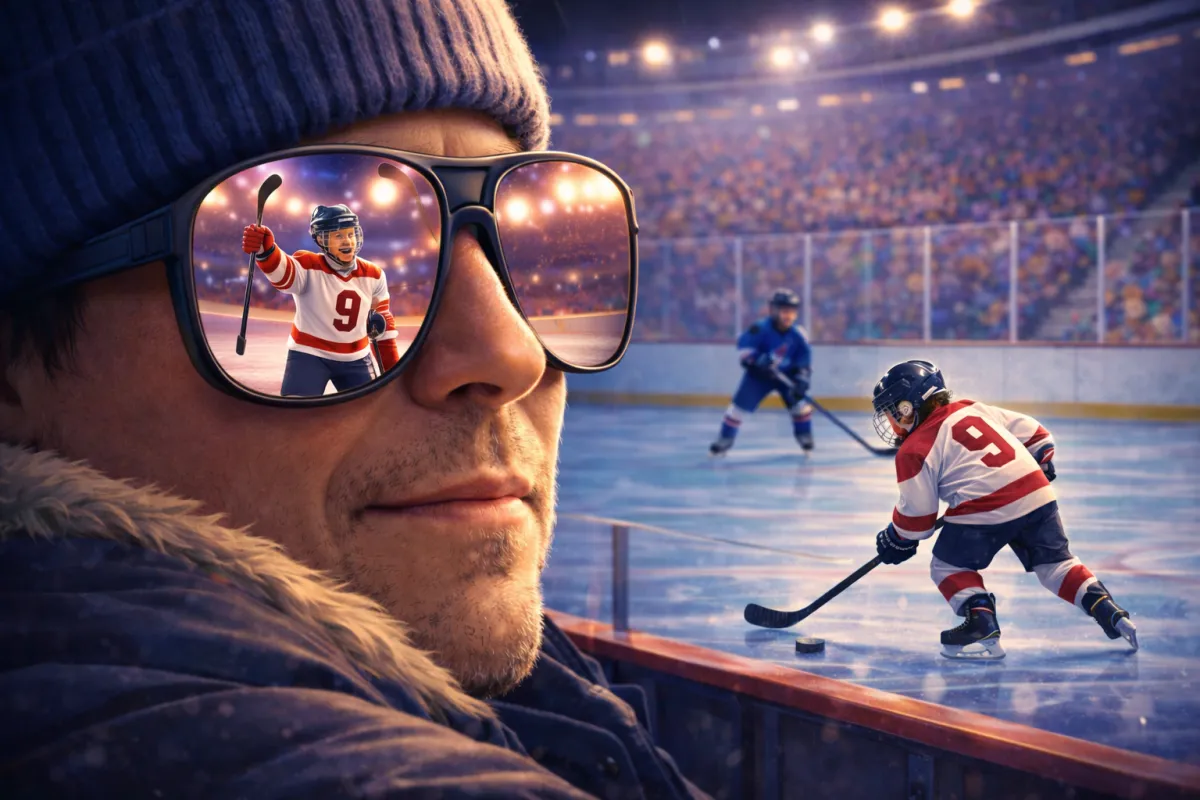
A sports parent whose love and personal identity become so tied to their child’s success that they begin seeing the player they hope their child becomes, not the player currently on the ice.
Youth hockey has a funny way of teaching lessons far beyond the ice.
Skating, teamwork, resilience, discipline. Those are the obvious ones.
But there is another lesson quietly living in the stands. One that almost every sports parent eventually bumps into whether they realize it or not.
It is something we call Parental Projection.
Parental Projection happens when a parent’s emotional investment in their player becomes so strong that it begins to cloud their ability to evaluate the player objectively. It rarely comes from a bad place. In fact, it usually comes from the best place possible.
Love.
But love can also create blind spots.
Parents begin seeing the player they hope their child becomes instead of the player who is currently on the ice.
And youth hockey has a way of exposing that gap pretty quickly.
The Hardest Evaluation in Hockey
The hardest evaluation in hockey is not done by scouts.
It is not done by coaches.
It is done by parents.
Not because parents do not care. Quite the opposite. They care so deeply that separating effort from ability and potential from performance becomes incredibly difficult.
Every good shift becomes proof of greatness.
Every mistake becomes someone else’s fault.
Before long, the story being told in the car ride home begins to look very different from the game that actually happened.
And honestly, it is understandable why that happens.
Youth hockey slowly stops feeling like just a game.
At first it is simple.
Tiny jerseys hanging almost to their ankles. Mini sticks in the hallway. First goals that feel like Stanley Cup winners. Early mornings that somehow still feel exciting.
Then the years begin stacking.
Travel teams. Skills sessions. Spring hockey. Hotel weekends. Team chats. Rankings. Private lessons. Conversations about “levels.”
Parents invest thousands of dollars and thousands of hours into their child’s experience. They sacrifice weekends, rearrange work schedules, and emotionally ride every high and low right alongside their player.
That level of investment creates attachment.
And attachment can quietly create distortion.
Not because parents are bad people.
Because they care deeply.
The Stands Are Full of Them
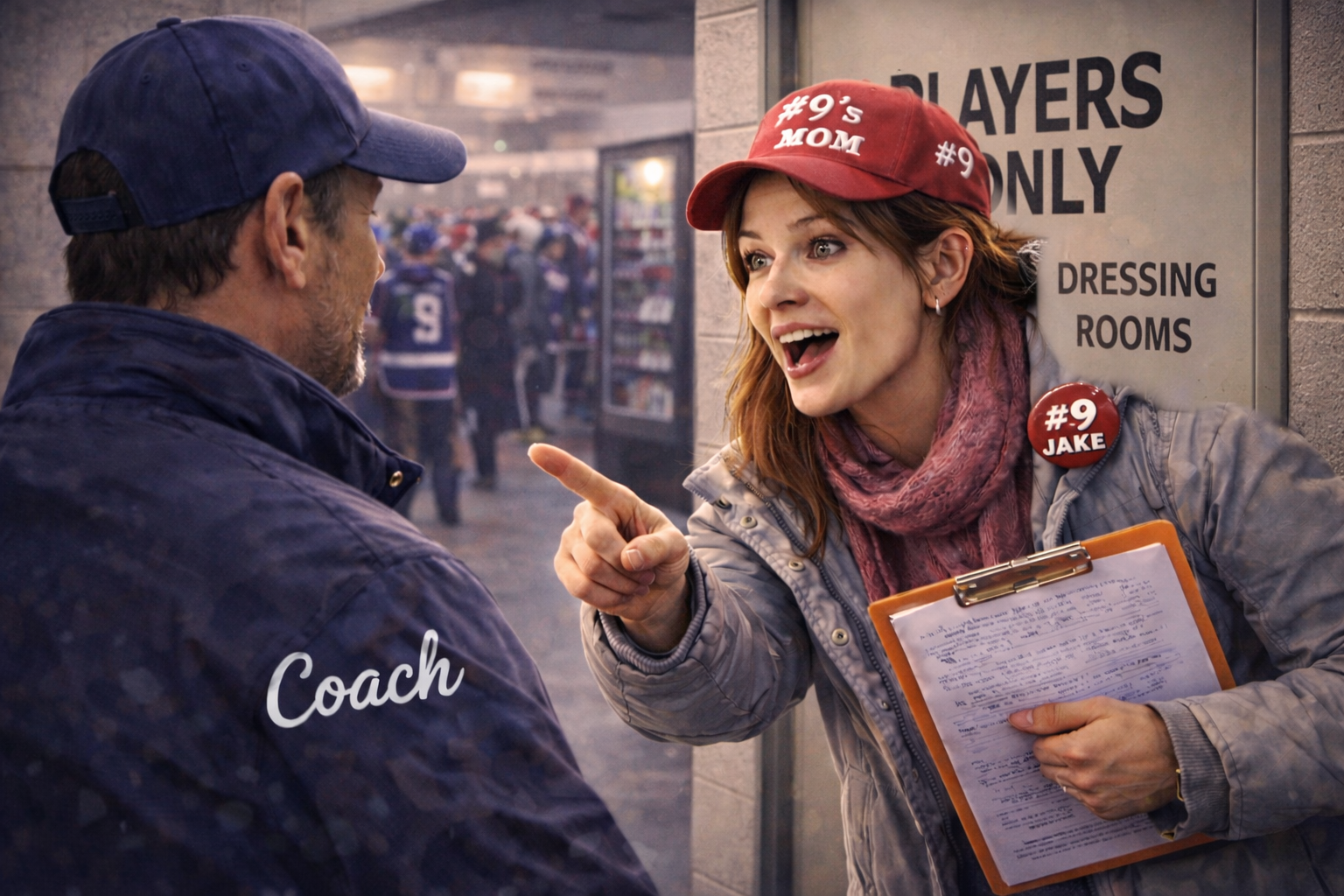
Spend enough time around youth sports and you begin to recognize the characters in the stands.
They are not villains. They are simply parents navigating a complicated mix of pride, hope, emotion, and competitive environments.
Sometimes those emotions create patterns.
The Highlight Reel Parent remembers the breakaway goal in the second period but forgets the other forty-five seconds of the shift.
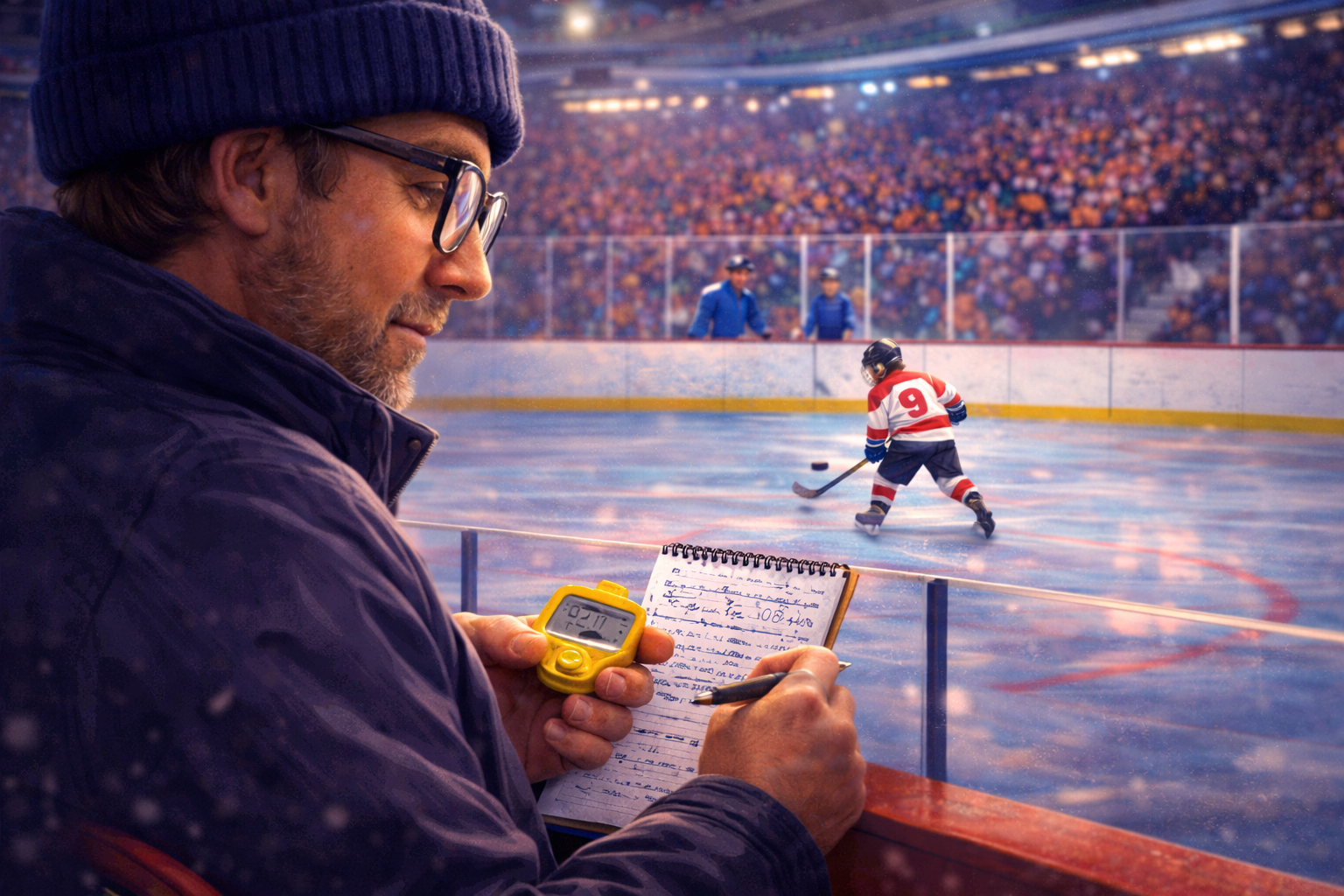
The Ice-Time Accountant tracks every shift like an IRS audit but rarely mentions turnovers, habits, or details away from the puck.
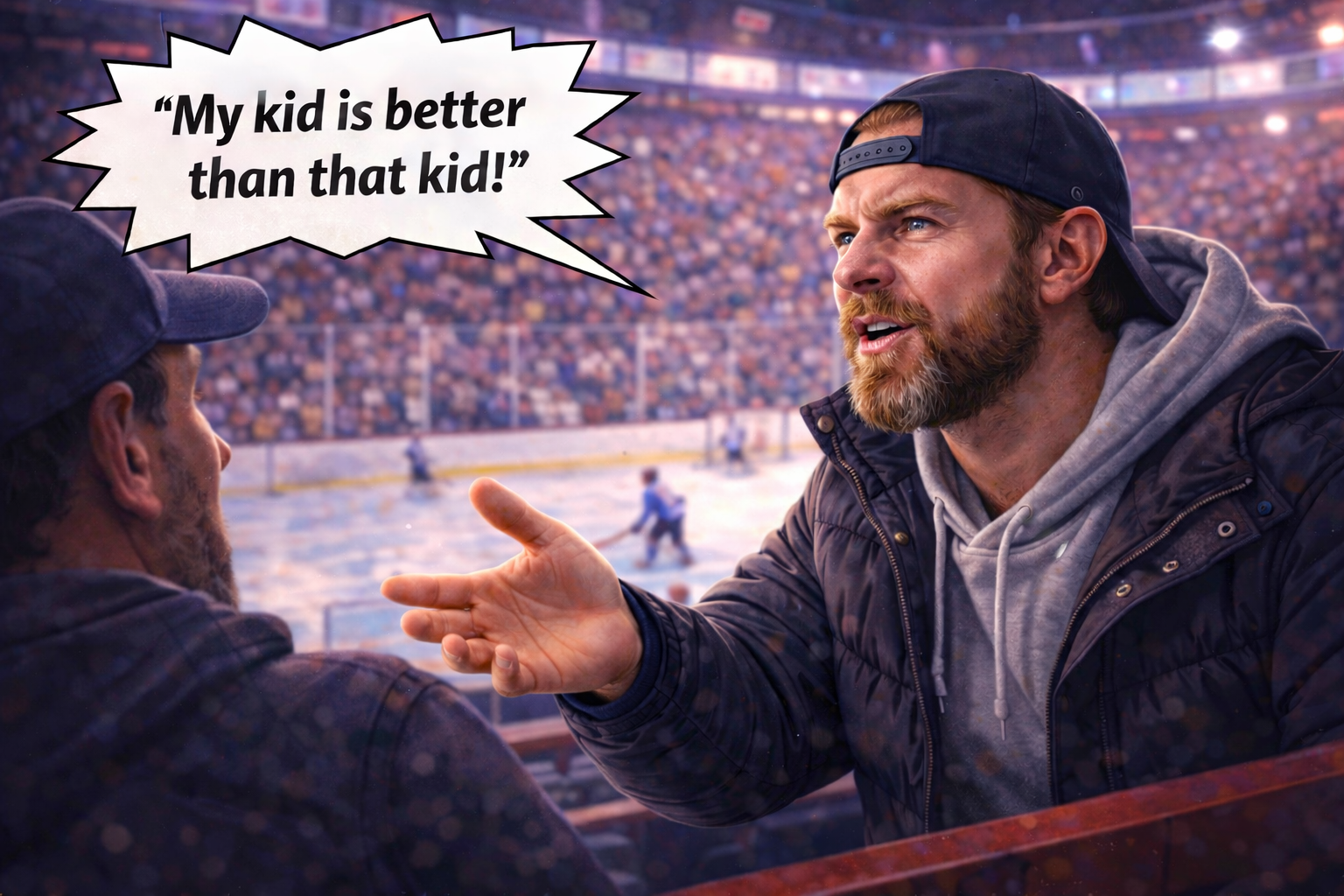
The Comparison Parent evaluates the entire team with one sentence.
“My kid is better than that kid.”
And then there is the Uncle Rico Parent.
If you have ever seen Napoleon Dynamite, you know the type. The one in the stands explaining how the coach should run the lines, what system the team should be playing, and how things would look a lot different if their kid had just gotten a little more ice time.
In their version of hockey history, if their kid had been on the power play…
If their kid had been double-shifted…
If their kid had just played a little more…
“They would have been State champions, no doubt.”
The funny part is most of these parents are not trying to become “that parent.”
It happens gradually.
Because youth sports have become emotionally loud.
Social media does not help either.
Every weekend feels like a scouting combine on Instagram now.
Commitment graphics. Highlight videos. “Top prospect” rankings. Edited clips with dramatic music and slow motion goals.
Parents consume snapshots of success from other families all day long while quietly comparing them to their own player’s journey.
That environment creates pressure disguised as ambition.
Suddenly development stops feeling developmental.
It starts feeling urgent.
And urgency changes behavior.
Parents start chasing shortcuts.
Players start carrying stress they were never meant to carry at twelve years old.
Every shift begins feeling bigger than it actually is.
The Danger of the Blind Spot
The problem with parental projection is not belief.
Every athlete needs someone who believes in them.
Belief is powerful.
The danger comes when belief turns into distortion.
When a player is constantly told they are better than they currently are, improvement becomes difficult. Growth requires honesty. Development requires awareness.
Players who receive constant inflated feedback often miss the most important tool in sports.
Self-awareness.
Without it, the path forward becomes blurry.
Because hockey eventually exposes everyone.
At some point, the game stops caring about potential and starts demanding execution.
Can you process pressure?
Can you defend?
Can you compete consistently?
Can you handle adversity?
Can you improve the uncomfortable parts of your game instead of avoiding them?
Those answers cannot stay hidden forever beneath praise and projection.
And players are smarter than adults realize.
They can feel projection.
They feel it in the quiet car rides home after losses when nobody quite knows what to say.
They feel it in the silence after games.
In the conversations about ice time.
In the subtle disappointment after mistakes.
In the constant comparisons.
Sometimes the pressure is loud.
Sometimes it is incredibly quiet.
But players feel it.
Eventually many young athletes begin tying their self-worth to performance because they sense the adults around them doing the same thing.
That is where youth sports can quietly become dangerous.
Not physically.
Emotionally.
Because confidence built only on outcomes becomes fragile.
The moment adversity arrives, identity starts wobbling right alongside it.
Confidence vs. Delusion
There is a massive difference between confidence and delusion.
Confidence says:
“I can improve.”
Delusion says:
“I already arrived.”
Confidence embraces coaching.
Delusion resists it.
Confidence understands weaknesses exist.
Delusion explains weaknesses away.
The healthiest athletes are usually the ones who can honestly evaluate themselves without losing belief in themselves.
That balance matters.
Because hockey development is filled with uncomfortable truths.
Sometimes another player is simply ahead right now.
Sometimes your player needs more time physically.
Sometimes they need more maturity.
Sometimes they need stronger habits.
Sometimes they need better details.
Sometimes they simply are not as good today as everyone hoped they would be.
And that is okay.
Development is not a race to prove who was right at twelve years old.
The Role Parents Can Actually Play
Ironically, the parents who help their players the most are rarely the loudest ones in the stands.
They are usually the most grounded.
They understand something important about long-term growth.
Hockey careers are built on honest feedback, patience, consistency, and time.
They know their role is not to manage the lineup, analyze every shift, or lobby for opportunity.
Their role is far more powerful.
Provide support.
Provide perspective.
Provide stability.
Create a home environment where mistakes are survivable.
Create a relationship where the player knows love is not tied to goals, points, or team placement.
Let coaches coach.
Let players play.
Let growth take the long road it was designed to take.
That does not mean parents should never advocate when necessary.
It does not mean coaches are always right.
But there is a massive difference between healthy advocacy and emotional projection.
One seeks clarity.
The other seeks validation.
And players can feel the difference between the two.
The Timeline Trap
One of the hardest realities in youth hockey is accepting that development timelines are wildly unpredictable.
Parents desperately want growth to be linear.
Work hard. Improve. Move up. Repeat.
But hockey almost never works that way.
Some players dominate at ten years old and plateau at fifteen.
Some players barely make teams at twelve and become elite players by eighteen.
Some mature physically early.
Some mature emotionally later.
Some gain confidence quickly.
Some take years to truly believe in themselves.
The timeline is different for everyone.
And yet youth sports culture constantly pushes families toward comparison.
Who made what team.
Who got selected.
Who moved up.
Who got noticed.
Who is “ahead.”
The beautiful thing about hockey is that the game eventually sorts most of that out over time.
The player who stays coachable, self-aware, resilient, and committed usually keeps improving.
The player who believes they have already arrived often stops growing long before they realize it.
The Mirror Most Parents Avoid
Sometimes projection has very little to do with the child.
Sometimes it has everything to do with the parent.
The hockey career they never had.
The opportunity they missed.
The identity they once carried.
The dream that slipped away somewhere along the way.
Sports have a unique ability to reconnect adults to younger versions of themselves.
That can be beautiful.
It can also become dangerous when unresolved ambition quietly gets transferred onto a child wearing youth-sized shoulder pads.
Most parents would never consciously admit that.
But if we are being thoughtful and honest, parts of it exist far more often than people realize.
Again, that does not make someone a bad parent.
It makes them human.
The goal is not removing passion from parenting.
The goal is awareness.
Because awareness creates perspective.
And perspective creates healthier environments for players to grow inside of.
The Long Game
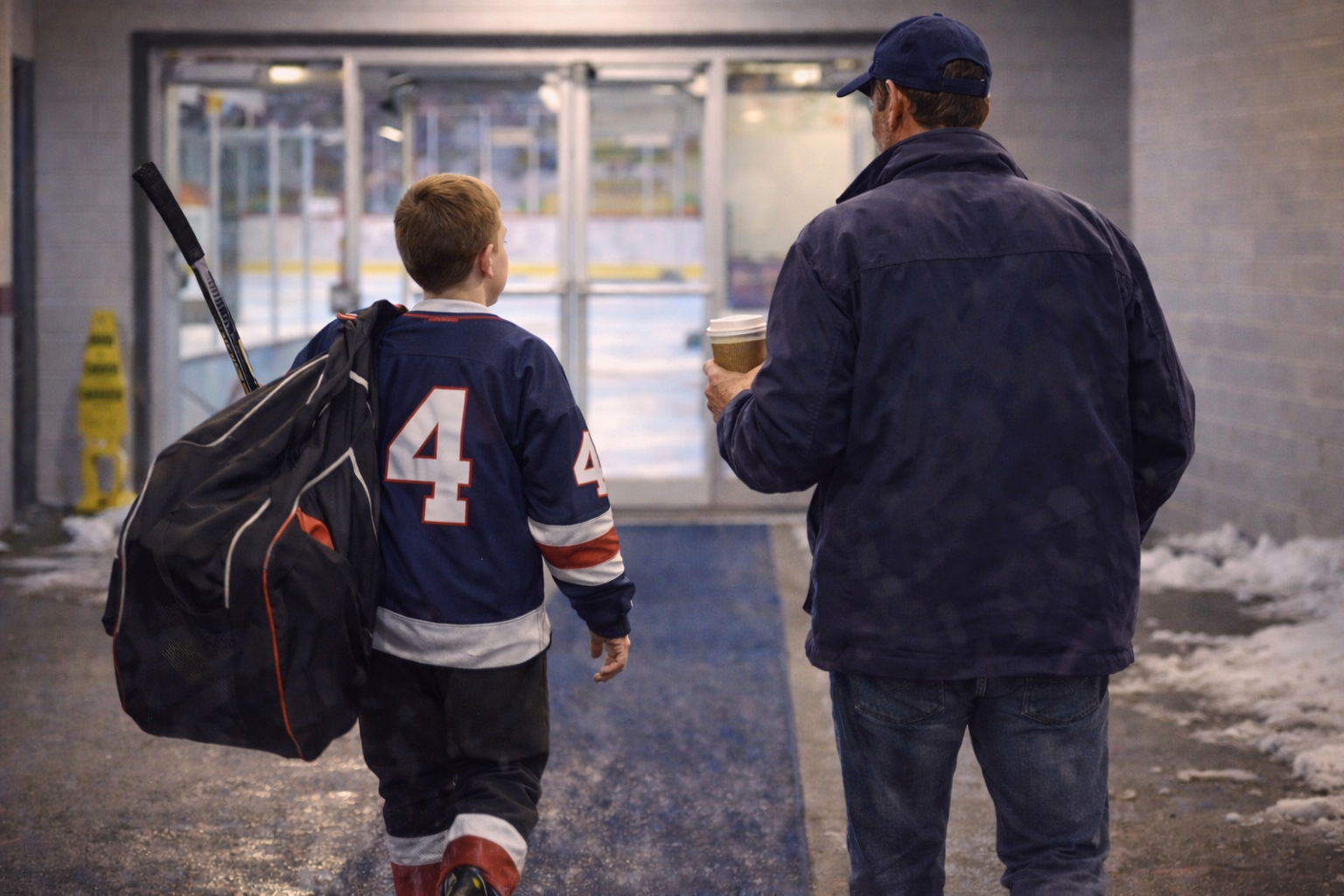
The beautiful thing about hockey is that the game has a way of humbling everyone eventually.
Players.
Parents.
Coaches.
All of us.
No one completely escapes adversity in this sport.
And maybe that is part of why hockey teaches such valuable life lessons when it is handled properly.
Because the real goal of youth sports was never supposed to be proving something today.
The real goal is building something that lasts.
Confidence.
Work ethic.
Self-awareness.
Resilience.
Humility.
Accountability.
Those things last far longer than any youth hockey standings or stat sheet ever will.
At the end of the day, most players will not remember their youth hockey statistics.
They will remember how hockey felt.
Whether the rink felt supportive or stressful.
Whether mistakes felt survivable or catastrophic.
Whether growth felt exciting or exhausting.
And long after the standings disappear, the relationship between parent and player is the thing that remains.
The best parents are not trying to manufacture the future.
They are creating an environment where growth can happen naturally.
Support without suffocation.
Belief without distortion.
Honesty without cruelty.
One conversation.
One practice.
One hard moment.
One small step at a time.
Because long after the stats, standings, and youth hockey politics disappear, players rarely remember who thought they were the best.
They remember who helped them become their best.🏒
About the Author
Darrell Hay spent sixteen years playing professional hockey and more than three decades around the game. These days he works with players and families navigating the development path and continues learning that hockey journeys rarely follow straight lines.
