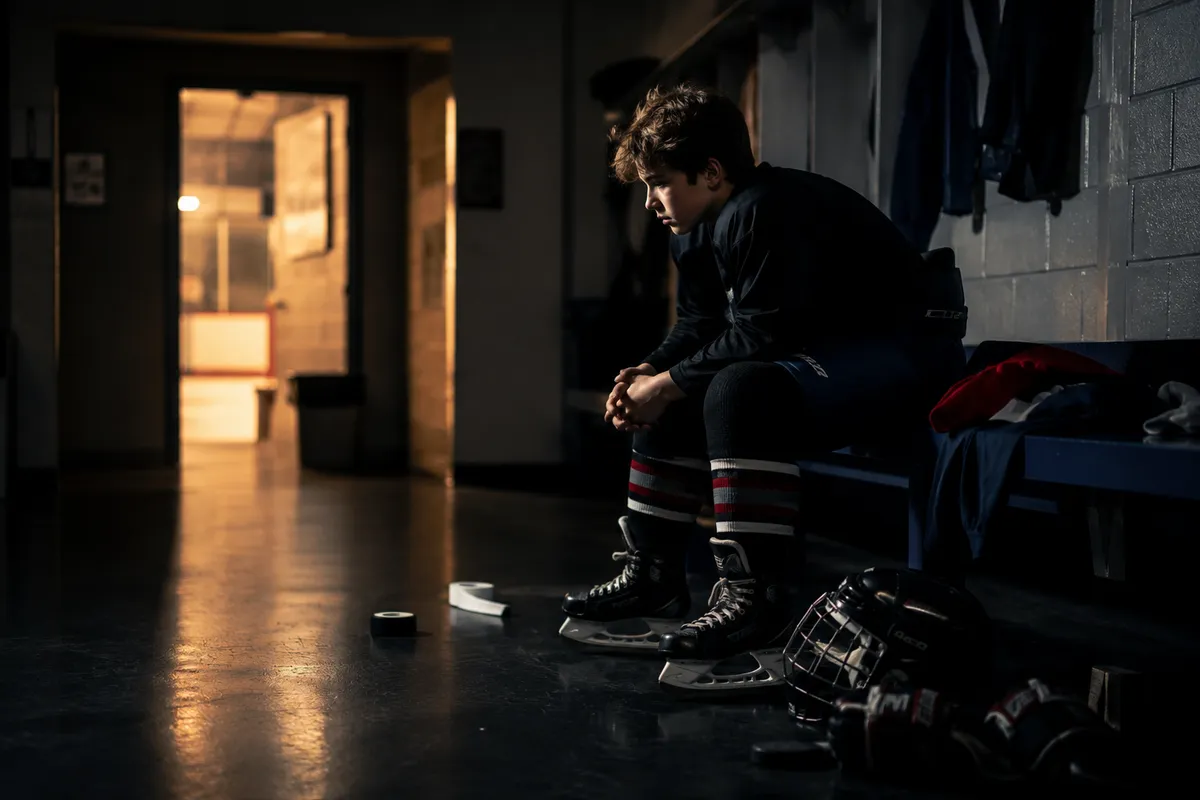
Permission to Fail: It’s Okay to Not Be Perfect
There’s a pressure cooker building around kids right now.
You can feel it at the rink. In schools. In locker rooms. In group chats. In the car rides home after games. In the way parents talk about schedules, rankings, private lessons, exposure, and opportunities. In the way social media turns childhood into a nonstop highlight reel where everyone appears to be winning all the time.
Perfect grades. Perfect goals. Perfect vacations. Perfect bodies. Perfect lives.
And somewhere in the middle of all of it is a kid just trying to figure out who they are.
That’s a lot to carry.
Sports used to be a place where kids learned how to compete, struggle, fail, laugh, improve, and grow. Those things still exist, but the environment around them has changed dramatically.
The cost of sports has exploded. Specialization starts younger than ever. Families invest thousands of dollars chasing elite levels. Coaches are under pressure to win immediately instead of focusing on development first and victories second. Social media has turned accomplishment into currency.
Everything is measured now.
Points.
Followers.
Teams.
Scholarships.
Commitments.
Selections.
Exposure.
And the truth is, a lot of kids feel like they’re constantly being evaluated.
Not just by coaches.
By teammates.
By peers.
By parents.
By social media.
By themselves.
The pressure never fully shuts off anymore.
Chasing Perfect
I think somewhere along the way, we accidentally started treating childhood like a race.
A race to make the top team.
A race to get noticed.
A race to specialize earlier.
A race to train more.
A race to stay ahead.
And fear quietly entered the conversation.
Fear of falling behind.
Fear of missing an opportunity.
Fear that if a child takes a break, struggles, or develops later than someone else, the window somehow closes forever.
But development has never been linear.
Some players dominate at 10 and disappear by 16.
Some struggle early and explode later.
Some need time physically.
Some need time emotionally.
Some simply need room to breathe.
Growth rarely looks clean while you’re living through it.
The Cut That Stayed With Me
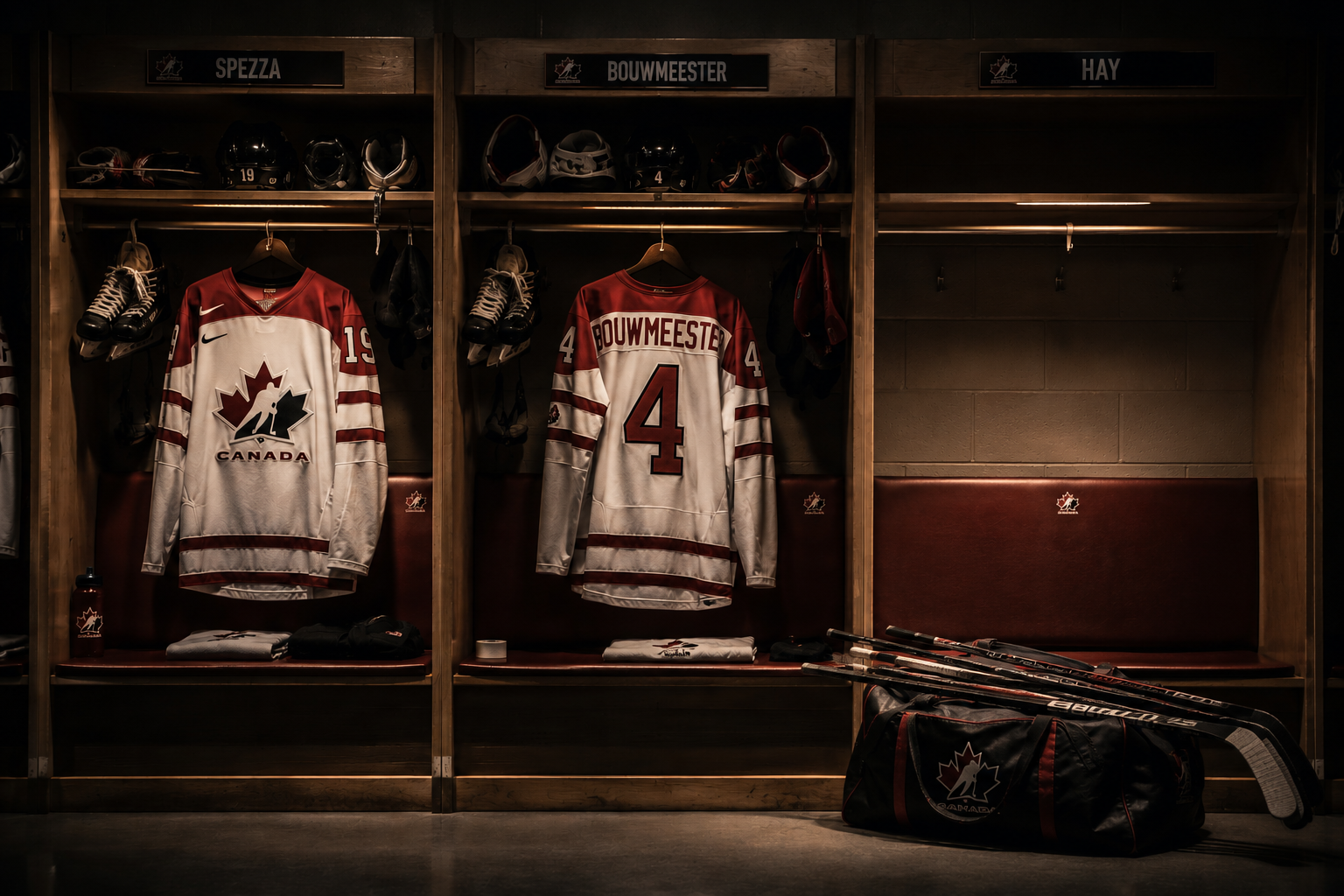
In 1999, I got cut from Team Canada’s World Junior team.
At the time, it felt crushing.
You spend years dreaming about moments like that. Years building toward it. You think about the jersey, the tournament, the honor of representing your country. Then suddenly, it’s gone.
Someone walks into a room and tells you that you’re not one of the chosen players.
That moment sticks with you.
I still remember the feeling.
The disappointment.
The embarrassment.
The self-doubt.
You replay everything in your head wondering what you could’ve done differently.
And the reality is, that team was loaded.
Two 16-year-olds made Team Canada that year. One was future Stanley Cup champion Jay Bouwmeester, who went on to be drafted 3rd overall by the Florida Panthers in 2002. The other was Jason Spezza, who became the 2nd overall pick by the Ottawa Senators in 2001, played over 1,000 NHL games, and is now an assistant general manager with the Pittsburgh Penguins.
The head coach of that team was Claude Julien, who later went on to win a Stanley Cup with the Boston Bruins.
Turns out they probably made the right decision, regardless of how disappointed I was at the time.
I think that perspective only comes with age.
When you’re young, disappointment feels permanent. You think one setback defines the rest of your story.
But it doesn’t.
Looking back now, as painful as it was, that experience shaped me far more than many of the successes did.
Because failure has a way of forcing honesty.
It makes you reflect.
It makes you reset.
It makes you grow.
Hockey Humbling You
Professional hockey taught me quickly that life can change directions overnight.
One week you’re called up.
The next week you’re sent down.
The American Hockey League and ECHL lifestyle can humble you fast. You learn that confidence can’t only exist when things are going well because eventually adversity shows up for everyone.
Then came Europe.
Playing overseas carried a different pressure. As an import player, expectations are immediate and visible. You’re expected to produce. You’re expected to lead. You’re expected to justify why the organization brought you there in the first place.
You’re adapting to another culture while trying to perform every night.
There’s pressure in all of it.
There were moments during those years where hockey felt heavy.
Not because I didn’t love the game.
Because I cared so much.
That’s something I think young players need to hear more often. Feeling pressure usually means something matters to you. That doesn’t make you weak. It makes you human.
Failure Is the Classroom
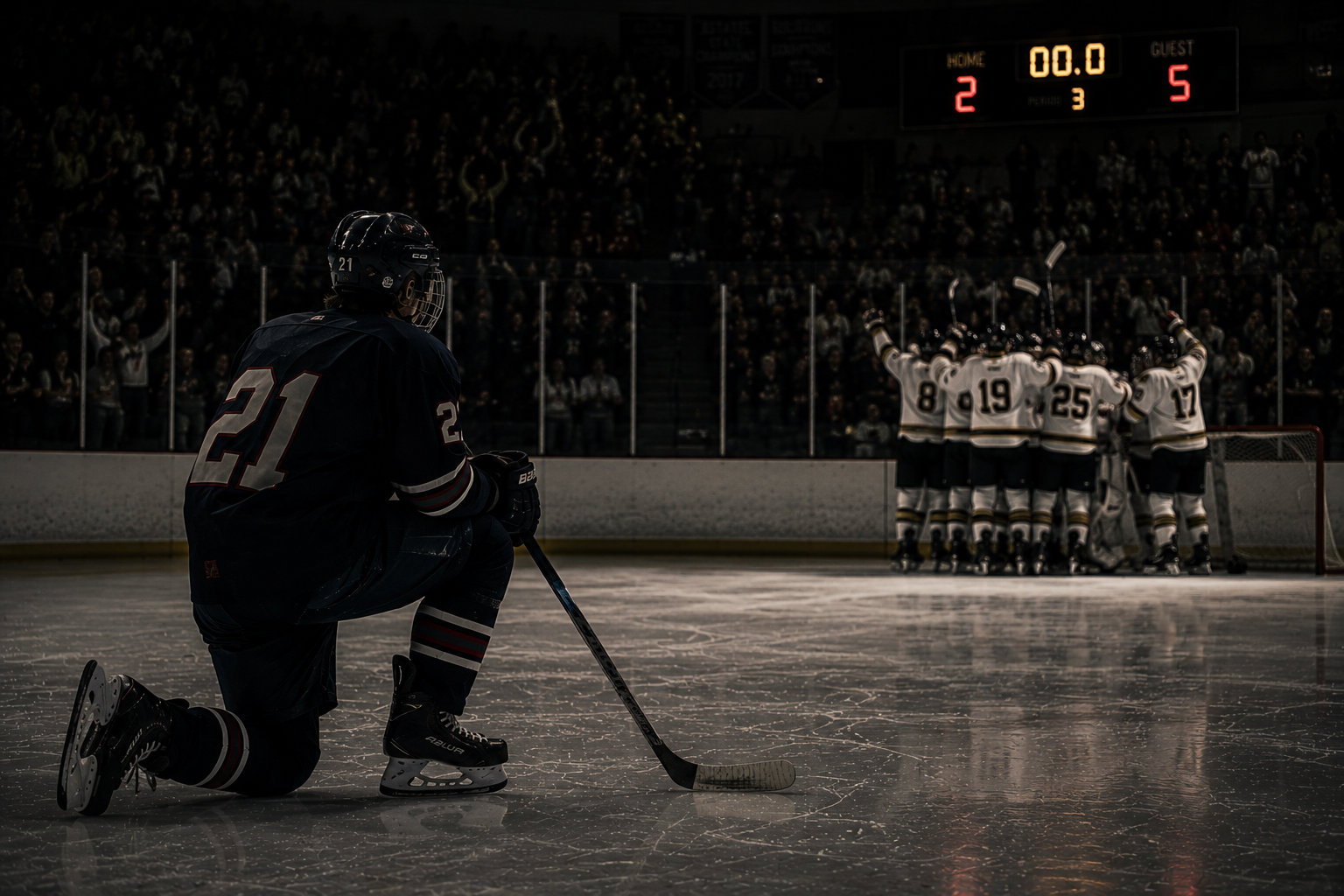
Looking back, the moments that shaped me most were rarely the victories.
They were the setbacks.
The uncertainty.
The nights when things didn’t go according to plan.
Those moments force you to answer difficult questions.
How badly do you want it?
Can you keep going when things stop being fun?
Can you handle feedback without falling apart?
Can you separate correction from rejection?
Can you stay coachable when adversity shows up?
Because growth usually sounds uncomfortable before it looks successful.
Sometimes development isn’t loud praise or constant validation. Sometimes it’s a coach stopping you to correct a detail, challenging you to improve, or telling you something you may not want to hear.
To a young person, critique can sound like criticism. But good coaches don’t correct players to make them feel like they aren’t good enough. They correct because they see something worth developing.
They see potential they’re trying to mine out of you.
They see another level you may not yet see in yourself.
That’s teaching. That’s development. That’s belief too.
And belief comes with responsibility. It means holding someone to an appropriate standard, having uncomfortable conversations, and pushing them beyond what they currently believe they can do.
Maturity is learning the difference between someone trying to tear you down and someone trying to build you up. It is learning to listen without allowing correction to destroy your confidence.
That’s a skill many adults are still learning too. Myself included.
That’s where growth lives.
Not in comfort. Not in applause. Not in highlight videos.
It lives in the uncomfortable moments when you must decide whether you’re willing to keep moving forward.
More Than a Hockey Player
Somewhere along the way, a lot of kids stopped feeling like kids.
They started feeling like résumés.
A roster spot.
A ranking.
A stat line.
A profile picture with a commitment graphic attached to it.
And the dangerous part is that after a while, they begin tying their self-worth to those things.
If the game goes well, they feel good about themselves.
If the game goes poorly, they feel like they are the failure.
That’s a heavy way to live.
I think as adults, we need to remind kids more often that hockey is something they do. It’s not who they are.
You can get cut and still be an incredible person.
You can struggle and still have a bright future.
You can fail at something without being a failure.
Sometimes I think parents need to hear that too.
A lot of this pressure comes from love.
Parents sacrifice time, money, weekends, vacations, energy, and emotion because they want opportunities for their kids. They want to help them succeed. They want to give them every chance possible.
There’s nothing wrong with caring deeply.
But sometimes, without realizing it, we begin carrying our children’s hockey journey like it’s a referendum on our parenting.
And kids can feel that weight.
They notice the tension in the car ride home.
They notice the frustration after games.
They notice when every conversation becomes about performance, advancement, or what comes next.
Sometimes the greatest gift we can give young athletes is letting them breathe.
Letting them struggle without panic.
Letting them learn without fear.
Letting them fail without feeling like love or approval disappears afterward.
Because confidence doesn’t grow from never falling down.
It grows from learning you can survive getting back up.
Sometimes kids don’t need another reminder to work harder.
Sometimes they need a reminder that they’re loved regardless of the scoreboard.
Coaching in a Different Era
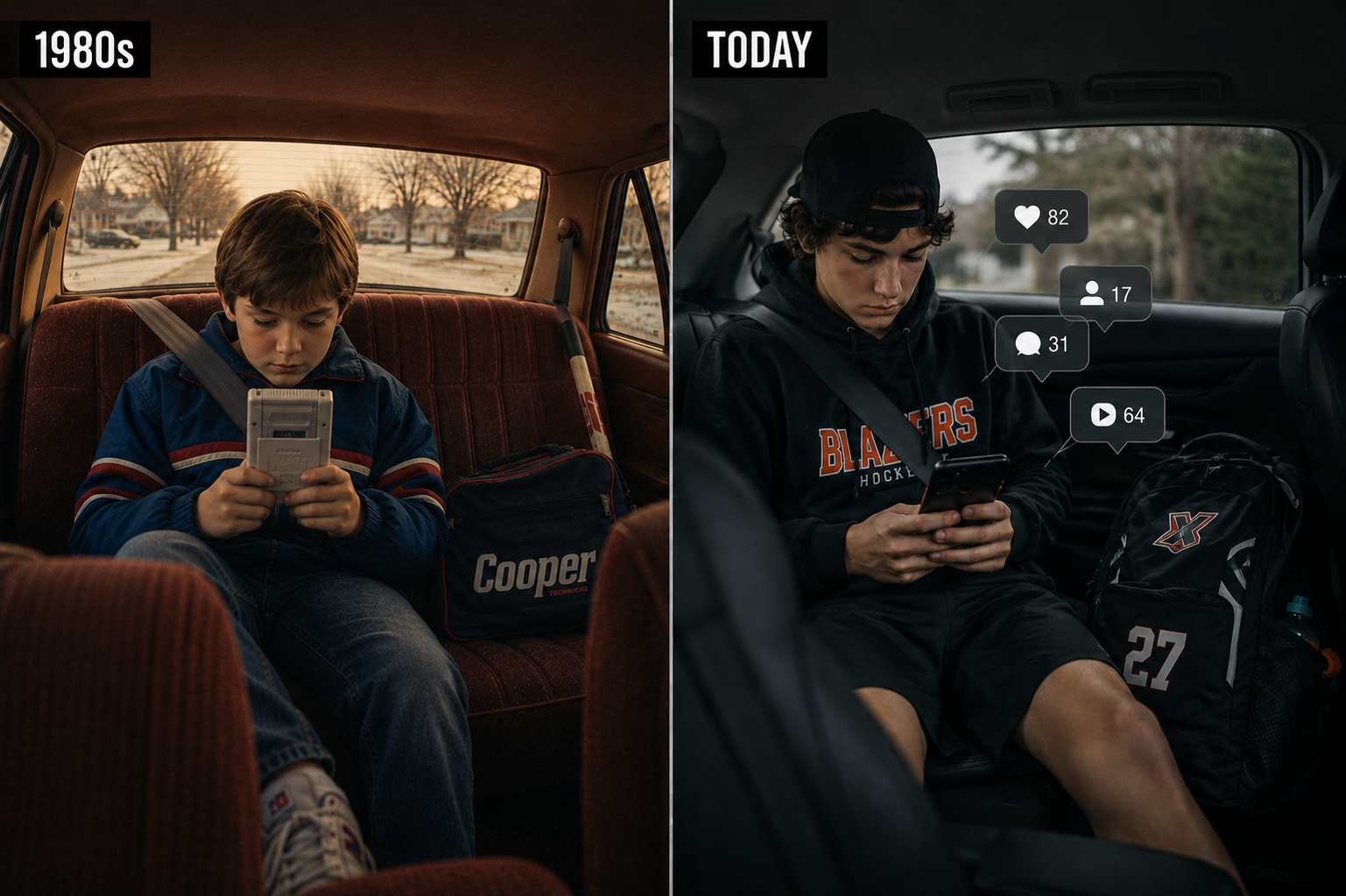
As I’ve transitioned from playing into coaching and leadership roles, I’ve realized something else.
The gap between generations is real.
I grew up as a kid born in the 80s and raised through the 90s. The world moved differently then. Communication was different. Expectations were different. Childhood itself felt different.
Now we’re coaching athletes in the 2020s and moving toward the 2030s.
Kids today are navigating pressures many adults never had to experience at their age. Their mistakes are public. Their confidence is often tied to instant feedback from phones and social media platforms that never stop talking.
As coaches, parents, and leaders, we have to recognize that.
Standards still matter. Accountability still matters. Competition still matters. None of that changes.
But creating an environment where players feel safe enough to struggle matters too.
Players need someone they can talk to when things get heavy. They need adults who can challenge them without crushing them. They need structure, honesty, and guidance, but they also need permission to not be perfect all the time.
Because perfection is not the goal.
Growth is.
Today’s Newspaper

One of my dad’s favorite sayings was:
“Today’s newspaper is tomorrow’s toilet paper.”
At first, it sounds harsh. Maybe even funny.
But there’s wisdom in it.
Life moves quickly.
The big game becomes an old headline.
The bad performance fades.
The championship banner gathers dust.
The social media post disappears into the algorithm.
The flashbulb moments come and go.
What lasts is who you become through all of it.
Your ability to handle adversity.
Your willingness to mature.
Your capacity to keep showing up.
Your ability to overcome setbacks instead of being consumed by them.
That’s what lasts.
Permission to Fail
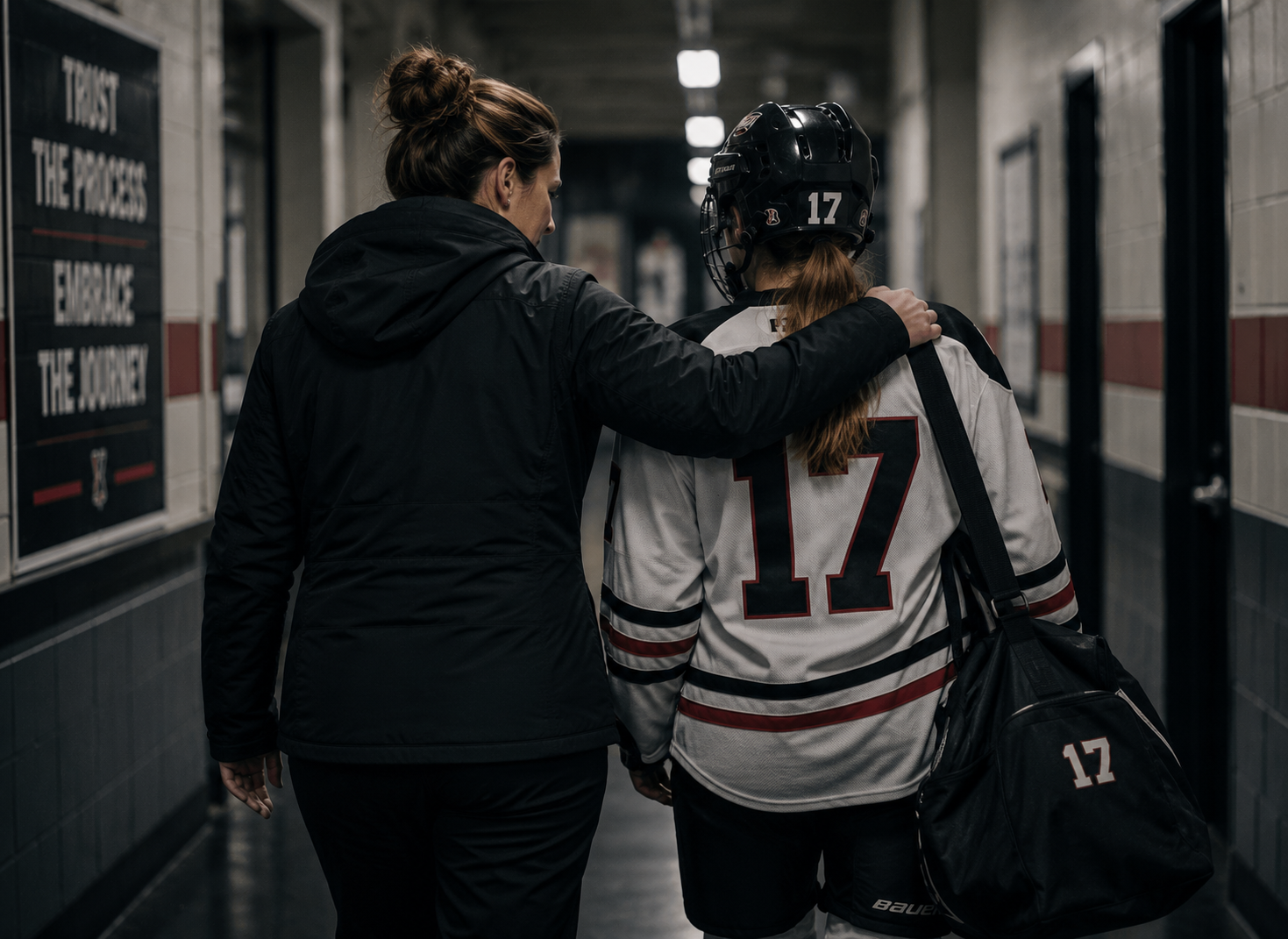
The best players and the best people, usually aren’t the ones who avoided failure.
They’re the ones who learned how to move through it.
Maybe that’s the reminder kids today need most.
You don’t have to be perfect to become successful.
You don’t have to dominate every stage of your journey.
You don’t need your life figured out at 14 years old.
You’re allowed to struggle.
You’re allowed to fail.
You’re allowed to learn.
You’re allowed to grow.
Sometimes the setbacks become the very thing that prepares you for what comes next.
Maybe the real goal isn’t raising perfect athletes.
Maybe it’s raising resilient people.
People who know how to handle adversity.
People who can work through disappointment.
People who understand that setbacks are temporary and growth takes time.
Because eventually the hockey ends for everyone.
But the ability to handle life when things don’t go your way? That part stays forever.
The goal isn’t perfection.
The goal is becoming someone resilient enough, hungry enough, and grounded enough to keep moving forward when life inevitably gets hard. 🏒
About the Author
Darrell still remembers getting cut, getting sent down, and getting humbled by hockey more times than he’d like to admit. Turns out the game teaches you a lot more during the hard days than the highlight-reel ones anyway.
Over time, he realized the biggest lessons hockey gave him never showed up on the scoreboard.
The game taught him how to handle adversity, accept feedback, work through disappointment, and keep showing up when things didn’t go according to plan. Lessons that eventually carried into adulthood, marriage, parenting, leadership, and professional life.
Because eventually the hockey ends for everyone. The life lessons don’t.
