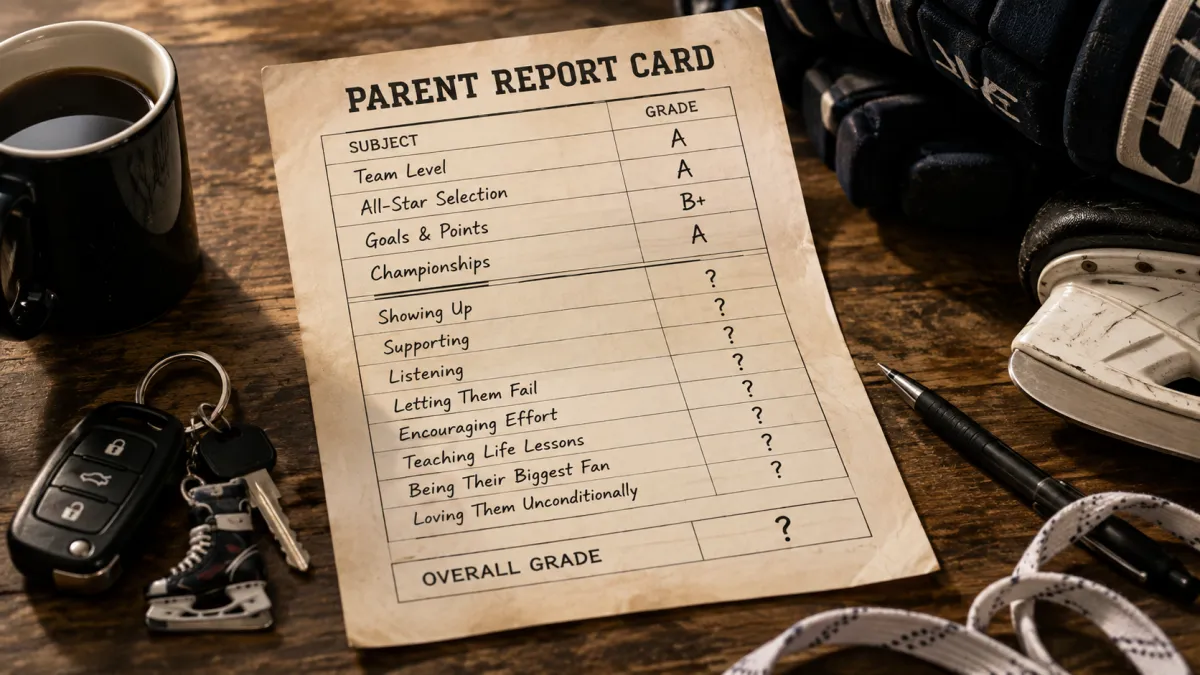
Kids Aren’t Your Scorecard
I was listening to an episode of Better Sports Parents with Scott Rintoul recently, and his guest was Jason Strudwick.
Jason is someone whose name has been familiar to me for a long time. He played for the Kamloops Blazers during the years my dad was part of the organization before going on to have a long NHL career himself. So when I saw his name attached to a conversation about youth sports and parenting, I was interested.
The episode,“Jason Strudwick: Kids Aren’t Your Scorecard, A Culture of FOMO & Problems with Super Teams”, is worth a listen.
There was one idea that really stuck with me.
Jason talked about kids becoming a “scorecard for parents.”
I haven't been able to shake that.
Not because I immediately thought about all the parents I've encountered during a lifetime around hockey.
I thought about myself.
I'm a parent. I'm a coach. I'm a former player. My kids play the same sport that has been a huge part of my family's life for generations.
We love our kids. We're proud of them. We want to provide opportunities for them and see them succeed.
But somewhere along the way, if we're not careful, their success can quietly start becoming our success.
And that's worth examining.
The Scorecard
Youth sports gives us a lot of ways to keep score.
Not just the one hanging above the rink.
What team did your kid make?
AAA or AA?
Top team or second team?
Are they on the power play?
How many points do they have?
Did they make the All-Star team?
Did they get invited to the camp?
What's next?
There is always another level, opportunity or accomplishment.
Listen to conversations around a rink and you'll hear it.
“We made AAA.”
“We're going to this tournament.”
“We got invited to this camp.”
I've probably said versions of those exact sentences myself.
But we didn't make anything.
Our kid did.
It's a small distinction, but I think there's something underneath it.
Our children's accomplishments can become social currency for adults. Their team, level and success can become part of our identity.
Without consciously deciding to do it, our child's athletic résumé can start becoming evidence that we're doing parenting correctly.
That's the scorecard.
I Had a Pretty Good Example
Maybe part of why this idea resonated with me is that I had a pretty good example growing up.
My dad had already lived his own hockey journey.
He played junior and professional hockey before moving into coaching and building a career in the game that belonged entirely to him.
By the time I was trying to figure out what kind of hockey player I could become, my dad didn't need my career to complete his.
He had his own story.
That's something I appreciate much more now that I'm a parent.
When things went well for me, of course he was proud. When I struggled, I'm sure he felt that too.
But I never felt like my success was necessary for him to be relevant in hockey.
He didn't become more successful because I got drafted, and he didn't become less successful when things didn't go my way.
His hockey belonged to him.
Mine belonged to me.
That's a pretty significant gift to give a kid.
He wanted big things for me without needing big things from me.
What I Want My Career to Give My Kids

I've thought about what my own playing career should mean for my kids.
I don't want it to be pressure.
I want it to be freedom.
I've already had my hockey career. I got to chase it. I played professionally for 16 years and more than 850 games. I had experiences in this game that I'll always be grateful for.
My kids don't need to recreate any of that for me.
They don't need to play professionally or junior hockey. They don't need to be the best players on their teams. They don't even need to love hockey the way I did.
Of course I want them to be good. I'm their dad. I love watching them succeed.
But I don't need their hockey to validate my career.
My experience should be something behind them that they can lean on if they want it.
It shouldn't be something sitting on top of them.
I can answer questions. I can teach them. I can show them what commitment looks like if they decide they want to chase something.
But eventually they have to decide what hockey means to them.
I've already had my turn.
This one is theirs.
But Then There's the Coach in Me
Here's where I have to be truthful with myself.
Being secure in my playing career doesn't make me immune to the scorecard.
It might just make my scorecard look different.
I'm also a coach. I teach hockey and work in player development. Families trust me to help their kids become better players.
So yes, I want my own kids to be good hockey players.
And if I'm willing to dig underneath that a little bit, part of it probably is ego.
If I'm supposed to know how to teach this game, it looks pretty good when my own kids can play.
That's uncomfortable to admit.
But it's true.
My kids shouldn't have to become advertisements for my ability to coach.
Their skating isn't my business card.
Their team isn't my coaching résumé.
For another parent, the scorecard might be the logo on the jacket, being able to say their kid plays AAA, points, playing time, the select team or eventually a college commitment.
For me, maybe the temptation is wanting people to look at my kids and think, Well, obviously he knows what he's doing.
Different motivations.
Same trap.
Our kids start carrying something that belongs to us.
Pride or Validation?
This is where the distinction gets difficult.
There is nothing wrong with being proud of our kids.
We should celebrate them.
Watching your child work toward something, struggle with it, stick with it and eventually accomplish it is one of the great parts of being a parent.
But there is a difference between being proud of our children and believing their accomplishments say something about us.
Does having a child make an All-Star team make you an All-Star parent?
Does your kid winning a championship make you a championship parent?
Does having a AAA player make you a AAA mom or dad?
Of course not.
Their accomplishments don't transfer to us.
And thankfully, neither do their disappointments.
Your kid getting cut doesn't make you a failure as a parent. Them making the second team instead of the first doesn't lower your standing as a mom or dad.
Their results aren't a grade on our parenting.
Our value is in showing up.
Supporting them.
Teaching them.
Listening to them.
Picking them up when they're disappointed.
Celebrating with them when something goes right.
Being there for all the things they're going to achieve and all the things they're going to fall short of in the hockey arena.
That's parenting.
Would We Still Do It If Nobody Knew?
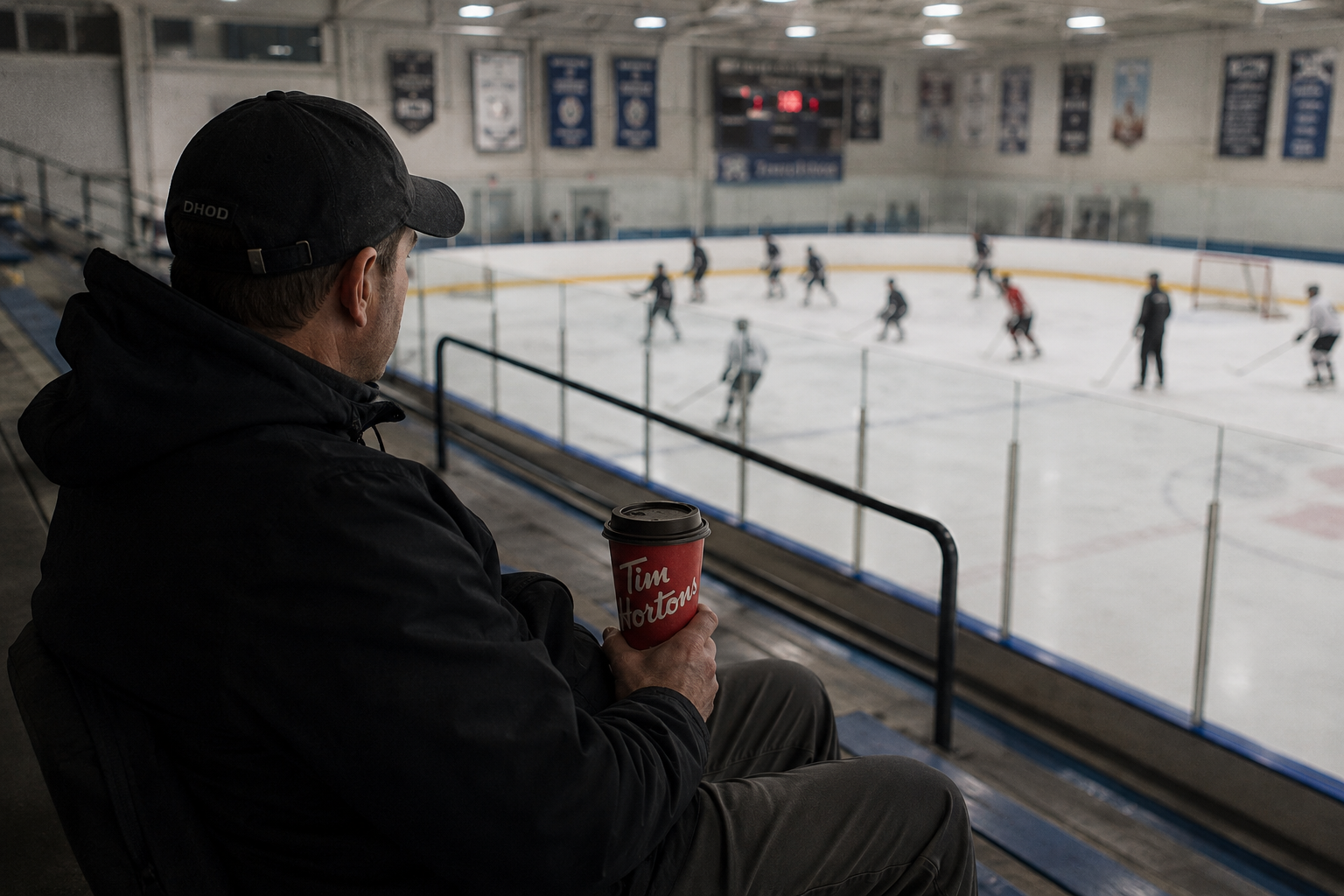
Maybe one of the best ways to test our motivation is to remove everybody else from the equation.
Would I still want this opportunity for my child if nobody else knew they were doing it?
No social media post.
No jacket with the logo.
No conversation at the rink.
Nobody asking what team they made.
Would I still think it mattered as much?
Would my kid making the second team bother me as much if I never had to tell another parent?
Am I disappointed because my child is disappointed?
Or because their result says something about me?
Do I want this next opportunity because my child is asking for it?
Or because everyone else's kid seems to be doing it?
And maybe the biggest question:
If my child never becomes particularly good at this, will I still believe all of it was worthwhile?
Most kids aren't going to play professional sports. Most aren't getting athletic scholarships. Many won't play beyond high school.
That doesn't mean the experience failed.
Unless we've decided the destination was the only thing giving the journey value.
Ambition Isn't the Problem
I don't want this to sound like an argument against ambition.
It's not.
I believe in development, extra ice, practice, coaching and doing hard things.
If your kid loves hockey and wants more hockey, give them more hockey.
If they want to find out how good they can become, help them.
There's nothing inherently wrong with AAA, private lessons, camps, spring teams, travel or chasing a big goal.
The question isn't whether we're investing.
The question is why.
There's a huge difference between:
My kid loves this and I want to help them see how far they can take it.
And:
I need my kid to keep advancing because I've attached part of my own identity to where they land.
From outside the glass, those families might look exactly the same.
What's happening underneath can be completely different.
We can want tremendously big things for our children without needing those things from our children.
What Are We Actually Trying to Build?
Maybe we've been keeping track of the wrong things.
Instead of asking what team our kid made, maybe we should ask whether they still love going to the rink.
Instead of measuring points, maybe we should notice how they respond when things don't go their way.
Instead of worrying about whether they're ahead of another 12-year-old, maybe we should ask whether they're becoming more confident, responsible and independent.
Instead of constantly asking where hockey is taking them, maybe we should occasionally ask what hockey is giving them.
Confidence.
Resilience.
Friendships.
Discipline.
Independence.
The ability to handle disappointment.
The courage to try something difficult.
The humility to be coached.
The ability to be part of something bigger than themselves.
None of those require AAA.
Sometimes the experiences that develop those qualities are the exact ones we'd rather protect our kids from.
Getting cut.
Sitting on the bench.
Struggling.
Making the second team.
Having to earn something.
Watching somebody else get the opportunity.
Those moments don't make very impressive social media posts.
But they might make pretty impressive people.
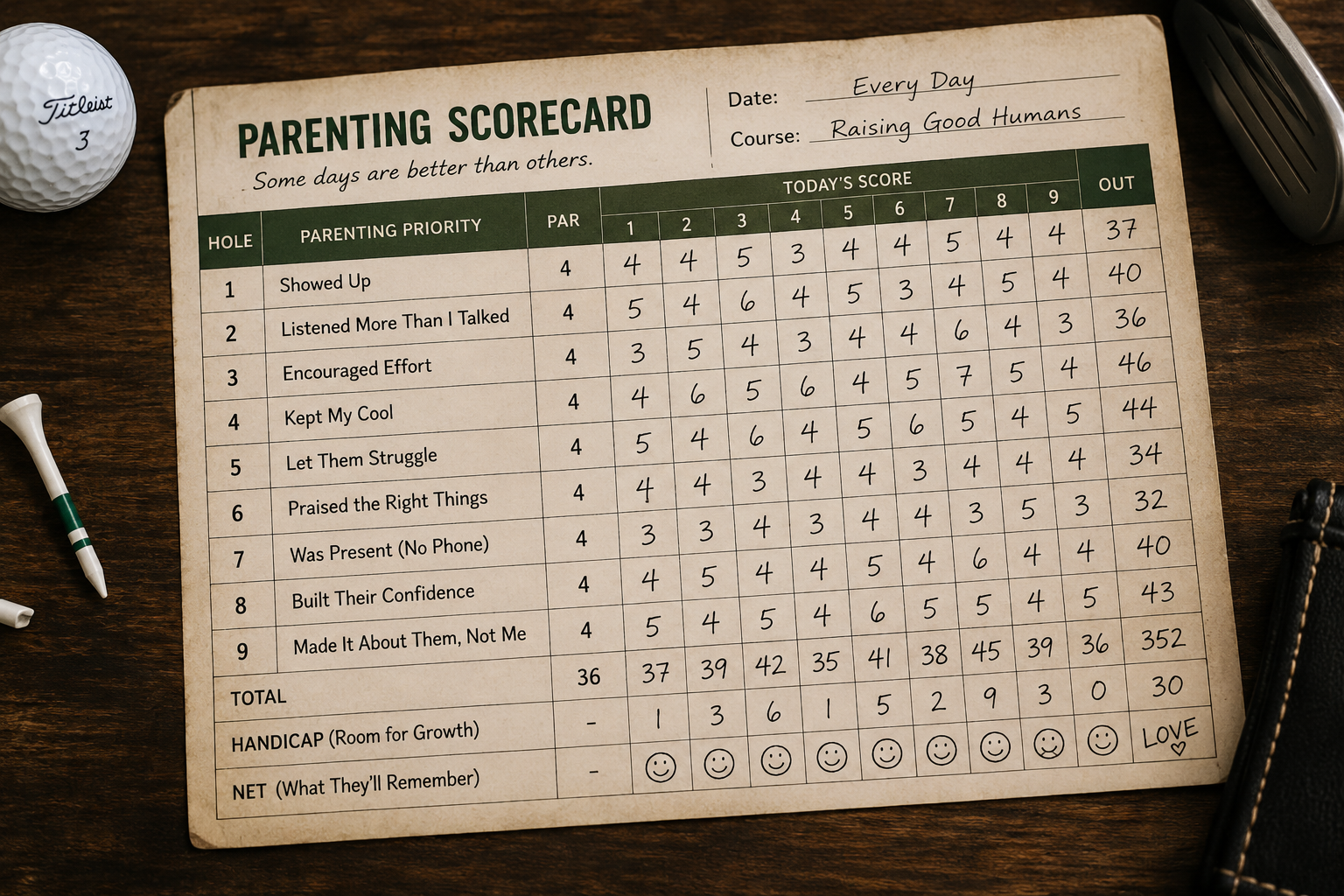
Maybe We Do Have a Scorecard
Eventually, hockey ends.
There will be a last practice, a last tournament and a last time we sit in the stands and watch.
Even for the tiny percentage who make a living playing the game, eventually someone tells you it's over.
When that happens, nobody cares what team you made when you were 12, how many A's were beside the team name or what line you played on.
But maybe the scorecard doesn't completely disappear.
Maybe there is a scorecard for us as parents.
It just has nothing to do with how good our kid becomes.
Did we show up?
Did we support them?
Did we let them fail and pick them up when they did?
Did we celebrate them?
Did we know when to push and when to back off?
When they struggled, did we make it about their disappointment or ours?
Did we give them opportunities without turning those opportunities into obligations?
Did we give them enough freedom to decide what they wanted the game to become?
And when it was finally over, did they know the entire time that we were proud to be their parent?
That's our scorecard.
My dad had his hockey journey.
He allowed me to have mine.
I've had my hockey journey.
Now I want my kids to have theirs.
I'll help. I'll teach. I'll drive. I'll challenge. I'll celebrate.
I'll probably screw some of it up.
And I'll have to keep checking myself when the coach in me starts wanting something that maybe the dad in me doesn't actually need.
Maybe that's part of being a sports parent.
Not pretending we don't have an ego or that we don't care what team our kid makes.
Just being self-aware enough to recognize when it starts becoming about us.
Our children's accomplishments belong to them.
We get to stand beside those accomplishments and be incredibly proud without needing to stand inside them and claim a piece for ourselves.
We can want big things for our kids without needing big things from them.
Because their hockey isn't our scorecard.
How we parent them through it is. 🏒
About the Author
Darrell Hay is a former professional hockey player, coach and hockey dad who struggles with this stuff every day too.
My parenting scorecard has plenty of bogeys and more than a few mulligans.
I push when I should back off, coach when I should just be Dad and sometimes care about results more than I should.
The goal isn't perfection. It's recognizing it, learning from it and showing up again tomorrow.
An All-Star jersey or championship will never be more valuable than what our kids learn through the process.
This is their journey, not a reflection of our worth or what other parents think of us.
Their scorecard belongs to them. How we support them through it belongs to us.
