
Activity or Achievement: Are You Really Growing or Just Staying Busy?
I've played enough golf in my life to know exactly how delusional athletes can become.
I'll walk off a course after shooting an 87 thinking:
"Honestly, I felt like I hit it pretty good today."
Then I look at the scorecard:
7 fairways hit.
6 greens in regulation.
5 double bogeys.
4 three-putts.
The data tells a very different story than the feeling.
Apparently flushing one 7-iron on the back nine can emotionally erase four hours of evidence.
Athletes do this constantly.
Hockey players too.
I know because I did it for 16 years professionally.
I can't tell you how many times I walked away from games thinking:
"I wasn't that bad."
Only to have the coach and game tape confirm I was actually worse than bad and just a hair above rotten.
We had coaches who called it seaweed hockey, soft, emotionally unavailable, or my personal favorite, "space cadet," because apparently your head was orbiting somewhere near Jupiter instead of tracking back through the neutral zone.
Another coach once called me a wheelbarrow because I kept getting pushed around all night.
I laughed internally at that one.
But underneath the sarcasm and colorful hockey language was usually a pattern.
That's the part that matters.
Anybody can have a bad game, a bad shift, a bad workout, or a rough stretch.
But if the same things keep appearing over and over again, like double bogeys and three-putts on a golf card, eventually you're not listening to the narrative anymore.
You're negotiating with it.
Activity Creates Comfort
This is something I've started noticing more and more in hockey, fitness, golf, and honestly life in general.
There are a lot of people doing a tremendous amount of activity.
They're on the ice constantly.
In the gym constantly.
At skills sessions constantly.
Always moving.
But are they actually growing?
That's the uncomfortable question.
Because activity and achievement are not always the same thing.
A rocking chair moves constantly too.
But it never actually goes anywhere.
Sometimes development looks exactly like that.
Busy. Active. Sweaty. Committed.
But ultimately stuck in the same place.
I think that's where a lot of athletes quietly plateau.
Not because they don't care. Not because they're lazy.
But because repetition without intentionality eventually creates comfort instead of growth.
They've built skill through volume, but their ceiling remains far lower than it could be because the work lacks detail, correction, awareness, accountability, or deliberate purpose.
And I'm not suggesting volume doesn't matter. It absolutely does.
You cannot become proficient at anything without accumulating repetitions. Nobody develops a great shot by thinking about shooting pucks.
But there's a difference between shooting 200 pucks and actually working on your shot for 200 repetitions.
One is counting.
The other is developing.
If you're repeating the same mechanical mistake 200 times, congratulations. You've become incredibly efficient at doing something incorrectly.
That fascinates me.
Because I genuinely wonder what the return on investment would look like if intentionality multiplied the amount of time athletes are already investing.
Imagine not needing more hours.
Just getting more out of the hours you already have.
The Illusion of Progress

I'm guilty of this too.
Especially in fitness.
There was a period in my life where I was drinking too much, clothes fit sloppy, my face lacked definition, and the only shape I was consistently maintaining was round.
But I remember sitting there saying:
"I'm in good shape for the shape I'm in."
Which is both hilarious and concerning at the same time.
The truth is, humans are incredibly good at adjusting our standards to match our comfort.
We normalize habits, routines, environments, and stagnation until something forces honest evaluation.
An old photo.
A stat line.
A scorecard.
A scale.
A recycling bin full of beer cans after a weekend.
That's when feelings collide with evidence.
And here's what makes the illusion so convincing.
We can usually find something positive to justify the story we're telling ourselves.
Maybe I worked out three times this week. Maybe I walked 18 holes. Maybe I ate a salad with lunch.
All good things.
But none automatically proves I'm getting healthier.
A hockey player might attend four practices, two skills sessions, and three off-ice workouts in a week.
That's impressive commitment.
But what improved?
Was the player quicker? Stronger? More efficient? More reliable under pressure? Better at making decisions?
Or just more tired?
There's an important difference between measuring participation and measuring progress.
And feelings can lie.
Patterns usually don't.
Facts eventually trump feelings.
"I Thought I Played Pretty Well"
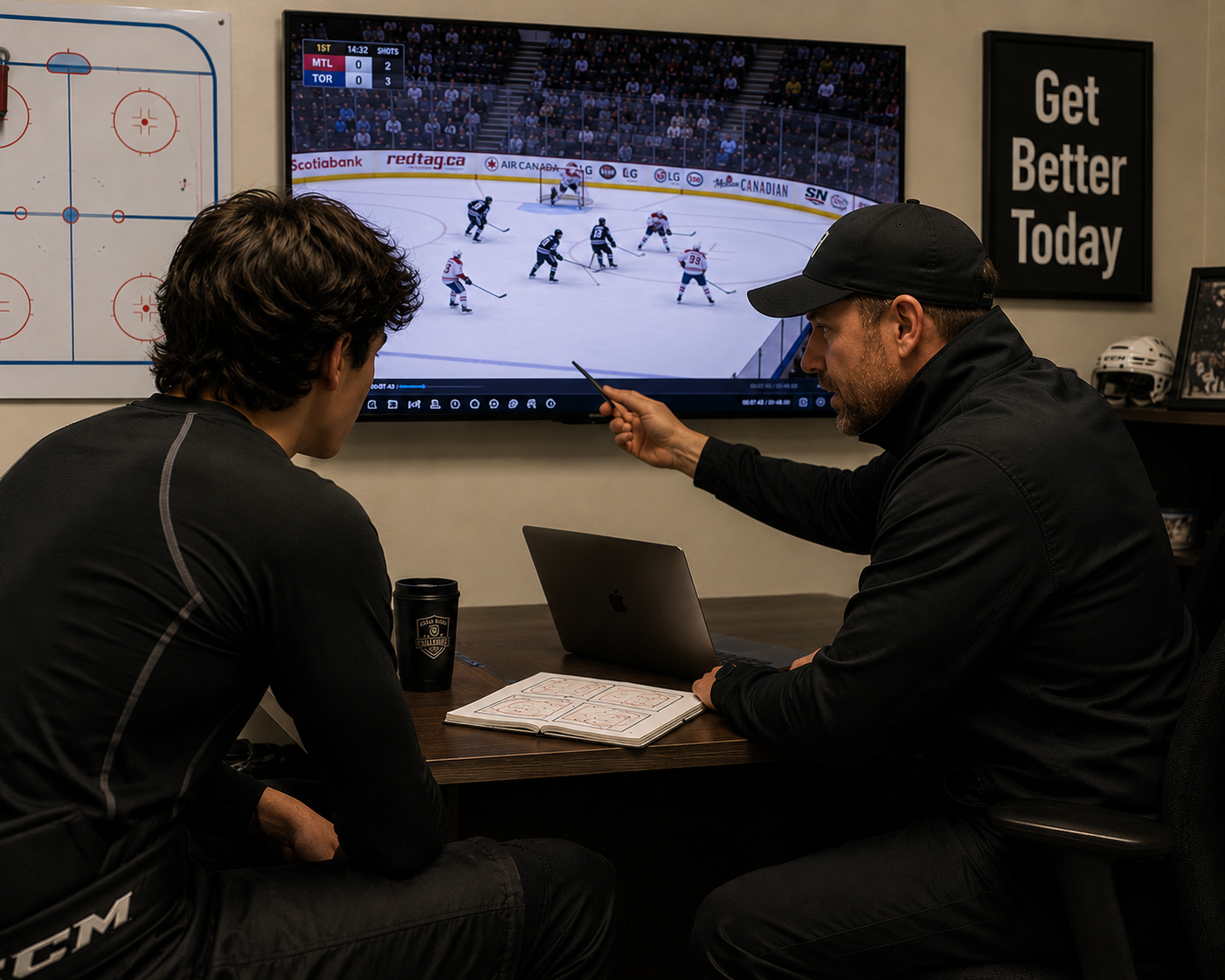
One of the most fascinating parts of coaching is listening to how players evaluate themselves.
You ask:
"How did you think you played?"
And sometimes the response is:
"I didn't think I was that bad."
Meanwhile:
No shots on net.
Eight turnovers.
Minus-three.
Second place in races all night.
No special teams.
No critical situations.
No trust minutes late in games.
The data doesn't support the feeling.
Now, hockey statistics aren't perfect. A player can have an excellent game without scoring, and a minus-three doesn't automatically tell us who was responsible for the goals.
Context matters.
But patterns tell a story that one isolated statistic cannot.
If a player continually loses races, gets caught on the wrong side of the puck, struggles with decisions under pressure, and fails to execute assignments, we eventually have to acknowledge the evidence.
And honestly, that same disconnect sometimes exists with parents too.
Parents often see the effort, commitment, and sacrifices being made.
Coaches have to evaluate whether those investments are translating into performance, reliability, and impact.
Neither perspective necessarily comes from a bad place.
They're just evaluating different things.
A parent might remember the beautiful rush their child made in the second period.
The coach might remember the three missed defensive assignments that followed it.
Both happened.
But only one might determine whether that player is trusted in a one-goal game.
That's why certain players kill penalties.
Why certain players are trusted protecting leads.
Why certain players are on the ice in critical moments.
Trust follows repeatable execution.
Not occasional flashes.
And trust isn't a participation award. It's developed through habits that coaches can reasonably expect to appear when the game is on the line.
The Hype Squad Era
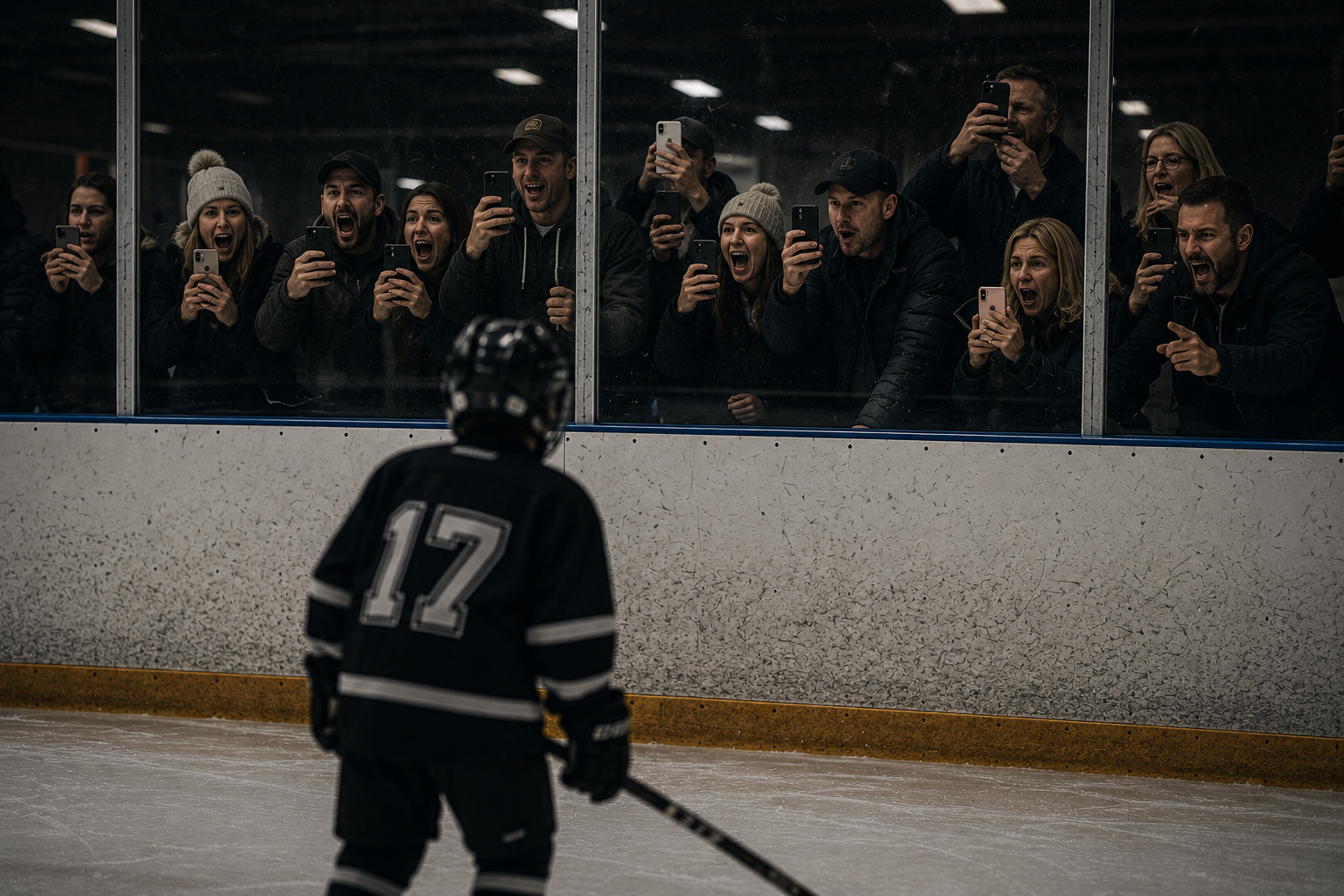
I think one of the challenges in modern development is that athletes can become surrounded by their own personal hype squads.
Every shift gets filmed.
Every touch gets clipped.
Every good moment gets replayed.
Meanwhile the harder conversations quietly get edited out.
The turnovers. The lost races. The poor decisions. The lack of impact away from the puck.
And sometimes athletes start evaluating themselves emotionally instead of objectively.
One nice rush suddenly outweighs a minus-three night, countless one-on-one battles lost, and a stat line that accidentally helped the other team more than your own.
I've seen enough highlight videos to know that just about anybody can look like an NHL prospect with the right 45 seconds of footage.
Unfortunately, hockey games are generally longer than 45 seconds.
And the other team doesn't disappear when the camera stops recording.
I'm not against highlights. Celebrate good plays. Enjoy the moments. Be proud of improvement.
But a highlight reel is supposed to capture highlights.
It was never intended to be a complete performance evaluation.
That's where the danger comes in.
When we only collect evidence supporting what we already believe, we start creating our own version of reality.
And that reality can become very comfortable.
The people who love us most are often trying to protect us.
That's human nature.
But support and evaluation are not always the same thing.
Sometimes the most valuable person in an athlete's development isn't the one telling them how wonderful they are.
It's the one willing to explain where they're falling short and how to improve.
Not because they enjoy delivering criticism.
Because they're invested enough to tell the truth.
The golf scorecard doesn't care how optimistic I felt walking off the 18th green.
The game tape doesn't care that I thought I "wasn't that bad."
Eventually performance reveals itself honestly.
Seaweed Hockey

We used to call it "seaweed hockey."
Floating around.
Drifting through the game.
Always moving but never really driving anything.
A lot of silver and bronze medals in races.
Technically involved.
But not truly impacting the outcome.
One thing I appreciate more now as a coach is just how easy it is to confuse visible effort with effective effort.
A player can skate hard for an entire shift and accomplish very little.
They can chase the puck, arrive late to every situation, make themselves unavailable for passes, and spend 40 seconds reacting to everything happening around them.
From the stands, it might look like they're working incredibly hard.
And they probably are.
But hard work without awareness can become a very expensive way to accomplish nothing.
Sometimes the player who appears to be doing less is actually accomplishing more because they're reading the game, anticipating the next play, and arriving where they're needed before the situation develops.
That's not laziness.
That's efficiency built through understanding.
And honestly, life can become seaweed too.
Busy schedules. Busy calendars. Busy routines.
Movement without intentional direction.
We become so occupied with doing things that we rarely stop to evaluate whether those things are accomplishing anything.
The best performers understand what they're trying to improve, why it matters, how it translates, and how to evaluate whether growth is actually occurring.
That's a completely different level of awareness.
More Reps or Better Reps?

Here's where I think the conversation becomes especially important for young athletes.
We're living in an environment where there is almost unlimited access to development opportunities.
More camps. More clinics. More private instruction. More off-ice facilities. More training technology.
And in many ways, that's fantastic.
Young players have access to opportunities that simply didn't exist when I was growing up.
But more access doesn't automatically create more development.
I often wonder how many athletes arrive at a practice or skills session without having the slightest idea what they're specifically trying to improve.
They show up, participate, sweat, and go home.
Mission accomplished.
Except maybe it wasn't.
What if a player entered practice with one specific objective?
Improve shoulder checks before receiving the puck.
Win more inside positioning battles.
Execute passes under pressure rather than simply completing passes without resistance.
Now the session has a purpose.
The player has something to evaluate.
And the coach has an opportunity to provide meaningful feedback.
The next practice becomes a chance to build on the previous one rather than simply repeat it.
That's how repetitions begin compounding.
It doesn't require turning every practice into a scientific experiment or removing enjoyment from the game.
It requires awareness.
Knowing what you're working toward and occasionally checking whether you're getting closer.
It's a simple concept.
But simple doesn't always mean easy.
Honest Evaluation Creates Growth
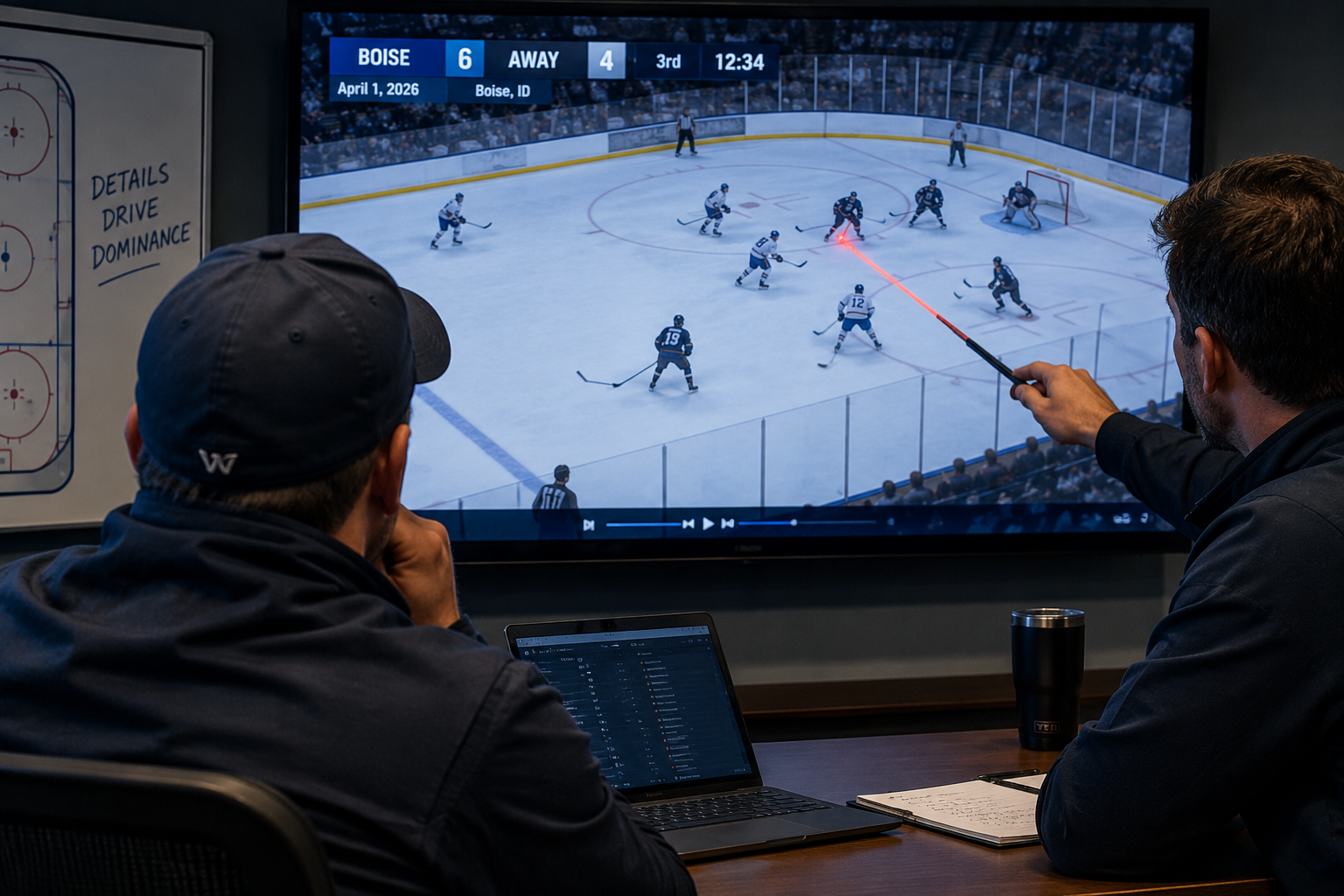
This article isn't about criticizing effort.
Effort matters.
Showing up matters.
Consistency matters.
And not every part of an athlete's development can be captured on a spreadsheet.
Confidence, maturity, leadership, and hockey sense aren't always easily measured.
But eventually honest evaluation has to enter the conversation too.
Otherwise activity starts impersonating achievement.
One of the most valuable habits we can teach young athletes is how to evaluate themselves without destroying their confidence.
There's a difference between saying, "I played terrible," and being able to say, "I struggled with my puck decisions tonight, and here's what I need to work on."
One is an emotional judgment.
The other is a starting point.
Good evaluation shouldn't make an athlete afraid of mistakes.
It should help them recognize mistakes, understand why they happened, and develop a plan to improve.
That's where coaches have a responsibility too.
Criticism without direction isn't development. It's just an opinion with a louder voice.
Telling a player they were bad might be accurate, but unless we help them understand what needs to change, we're just describing the problem.
The best feedback creates a path forward.
And maybe that's the hardest part of growth.
Not the workout.
Not the practice.
Not the extra reps.
The honesty.
The willingness to ask:
"Is this actually making me better?"
Because mature development requires separating feelings from feedback, movement from progress, and activity from achievement.
Intentional growth is demanding because it requires accountability.
And accountability forces us to confront patterns we often wish were isolated incidents.
But there's something encouraging about that process too.
When you can identify the problem, you can actually do something about it.
You stop defending the scorecard and start working on your short game.
You stop explaining away turnovers and start improving your decisions.
You stop counting how many workouts you've completed and start evaluating what those workouts are accomplishing.
The athletes, coaches, parents, and people who continue raising their ceiling are usually the ones willing to seek truth, accept feedback, embrace uncomfortable evaluation, and train with intentionality instead of simply motion.
I'm still learning that myself.
Sometimes I still walk off the golf course feeling pretty good about an 87.
And sometimes that one flushed 7-iron is all I need to convince myself I'm closer to the PGA Tour than the scorecard suggests.
But eventually, I have to look at the numbers.
A rocking chair moves constantly too.
The question is whether we're actually going anywhere. 🏒
About the Author
Darrell Hay spent more than 16 years playing professional hockey and learned somewhere along the way that golf scorecards, game tape, and old photos rarely lie. Through DHHD, he now works with players looking to train with greater intention, avoid "seaweed hockey," and hopefully spend less time being called a wheelbarrow by their coaches.
