The 12-Month Athlete: How Youth Sports Lost Their Seasons
A buddy of mine, Brent Fritz, reached out recently after reading some of my blogs.
Brent and I grew up playing hockey together in Kamloops. He went on to play professionally overseas, and now, as we've gotten older and watched another generation move through youth sports, he brought up an interesting topic.
Whatever happened to the multisport athlete?
It's a subject where I have a lot of horses in the race.
I'm a hockey director working within USA Hockey's American Development Model, which promotes long-term athletic development and encourages kids to participate in other sports.
I also own a private hockey development business. Camps, lessons, clinics and additional opportunities to play hockey are part of how I make my living.
And I'm a former professional hockey player who grew up playing just about everything.
So I'm certainly not standing outside the youth sports machine throwing rocks at it.
I'm part of it.
And maybe that's exactly why Brent's question stuck with me.
We Were Athletes First
Growing up, I never viewed another sport as taking time away from hockey.
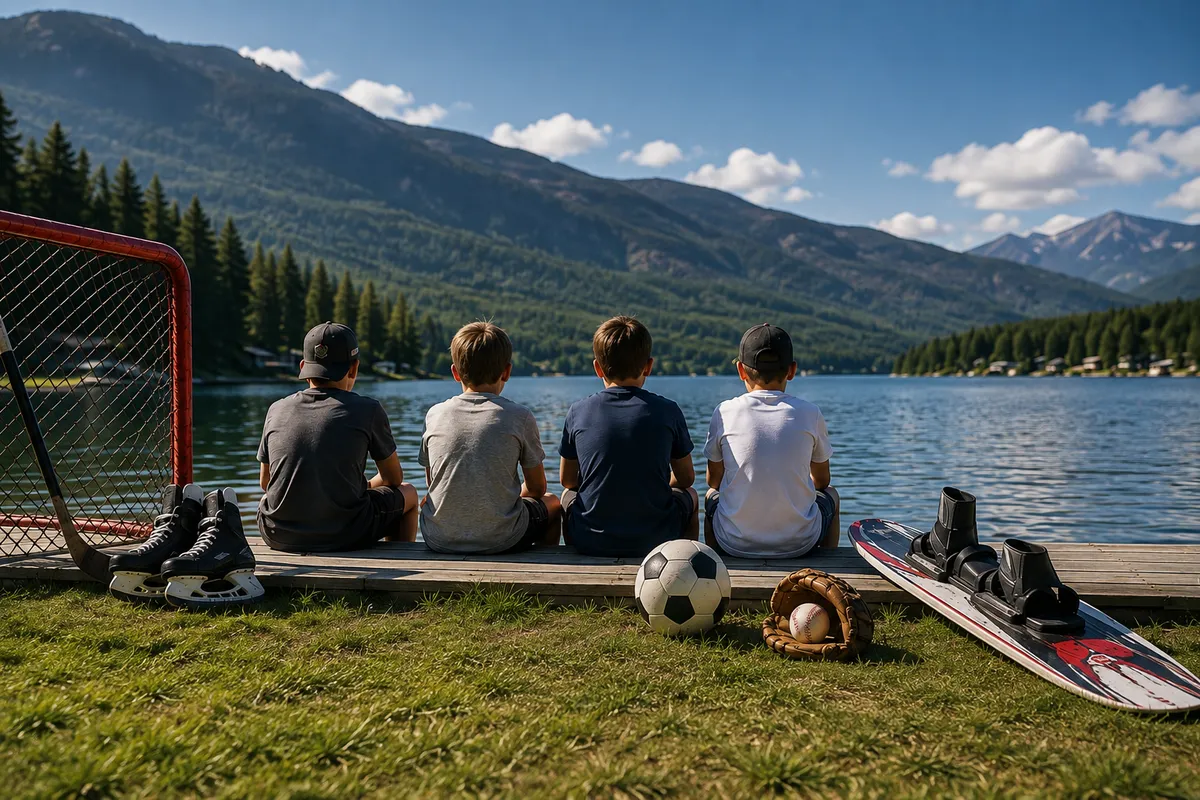
Baseball developed hand-eye coordination. Soccer developed foot-eye coordination, vision and spatial awareness. Waterskiing challenged balance and body control. Lacrosse taught us to play through contact and punishment. Basketball taught the pick-and-roll, give-and-go, spacing and playing off another person.
Golf and tennis developed another set of movements, timing and coordination. Hiking and mountain biking simply kept us moving.
And hockey gave things back to those sports too.
The funny part is that we didn't know any of this.
Nobody sat us down and explained transferable athletic skills. Nobody told us soccer was going to improve our hockey feet or baseball might help us knock a puck out of the air someday.
We were just playing.
Looking back, all those sports were cross-training. They were developing the athlete underneath the hockey equipment.
We didn't specialize in hockey and then try to build an athlete around it.
We became athletes, and eventually hockey became the sport we specialized in.
The Seasons Actually Ended
Part of that was simply the world we grew up in.
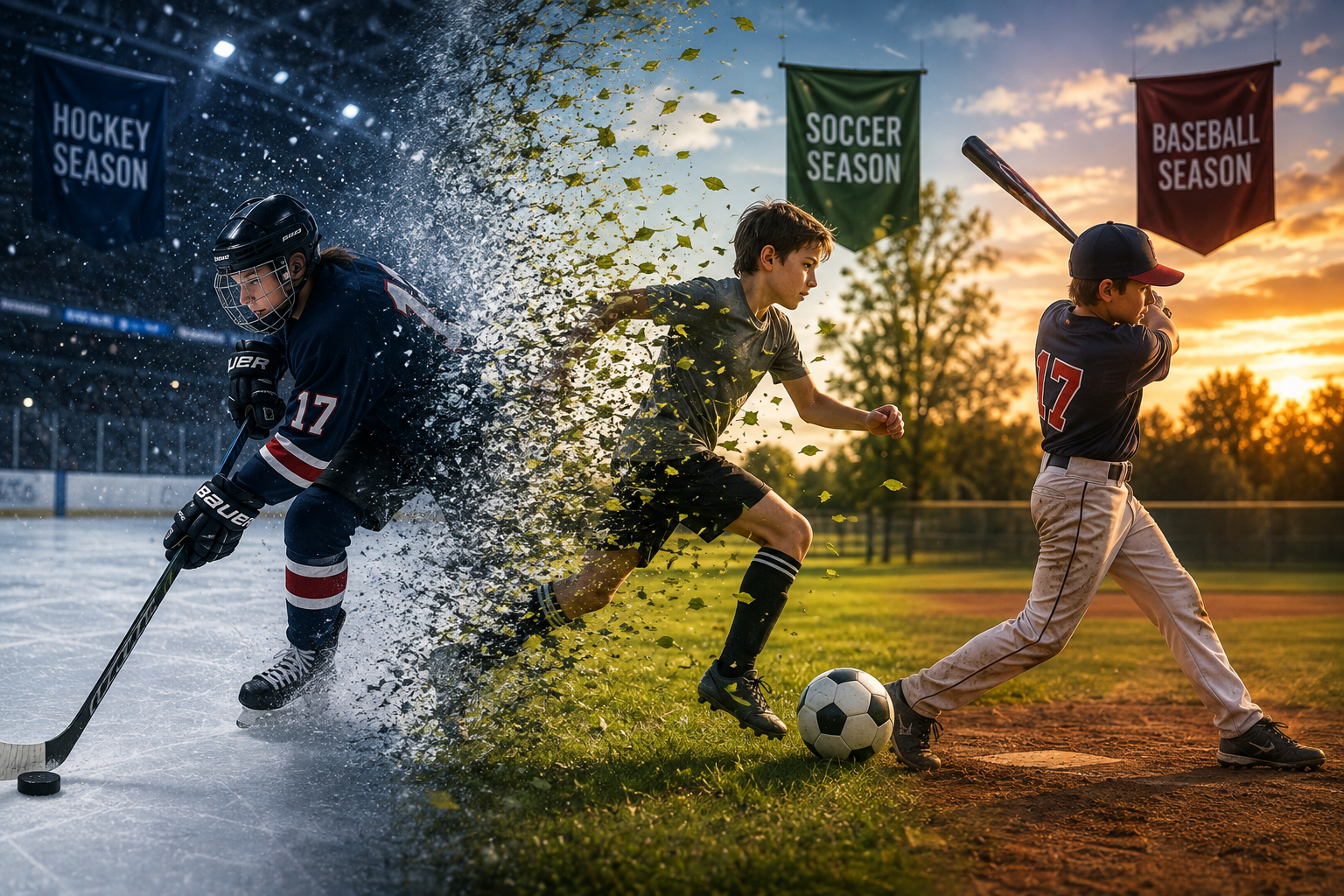
When hockey season ended in Kamloops, it ended.
The ice came out.
That didn't mean we stopped loving hockey. It meant there were baseball fields, soccer pitches, golf courses, lakes, mountains and other things waiting for us.
My mom stayed home when we were growing up, which certainly made sports easier for our family. Kamloops was relatively compact, and as I got older, I could ride my bike to the fields.
Recreational sports were relatively inexpensive too. You signed up and played. If you wanted to reach the next level, you tried out and earned a spot on an All-Star team.
Those circumstances matter.
It's easy to tell today's families their kids should play three sports without acknowledging the logistics involved. Two working parents, multiple children, longer commutes, higher fees and overlapping calendars can make that incredibly difficult.
Sometimes choosing one sport isn't about chasing a scholarship or creating the next professional athlete.
Sometimes Mom and Dad just can't be in three places on Tuesday night.
Even in my childhood, eventually there was a bottleneck.
I remember one summer when the weekends became too full and I couldn't keep doing everything. I had to choose.
And when I chose soccer, it wasn't because someone had explained how soccer fit into my long-term hockey development plan.
I chose soccer because my hockey buddies were playing soccer.
Brent was one of them.
We were competitive. We wanted to make teams and win games. But we also wanted to be with our friends.
We weren't specializing.
We were kids playing sports.
And we always knew hockey would be waiting.
Labor Day weekend would arrive, school would start again, and fresh ice would start going back into the rinks around the River City.
Then we'd become hockey players again.
Maybe the Other Sports Helped
Hockey history is full of examples that should make us question the idea that every hour away from the rink is an hour of development lost.
Wayne Gretzky loved lacrosse.
Chris Drury pitched in the Little League World Series before eventually winning the Hobey Baker, a Stanley Cup and playing more than 800 NHL games.
Anders Lee was an accomplished high school quarterback in Minnesota while developing into an NHL hockey player.
Joe Pavelski became an incredible golfer alongside a hockey career that lasted nearly two decades.
Morgan Geekie grew up playing baseball in addition to hockey.
These guys didn't become great hockey players despite experiencing other sports.
Maybe some of those experiences helped them become great hockey players.
That's the distinction.
Baseball isn't necessarily time away from hockey development. Neither is soccer, lacrosse, basketball or whatever else a kid enjoys doing.
They're different repetitions.
Different movements. Different decisions. Different teammates. Different coaches. Different ways to compete.
And perhaps most importantly, another opportunity to simply be an athlete.
How Did We Get to 12 Months?
This is the part Brent's question really made me think about.
I don't know of a major youth sports governing body in North America telling eight, nine or ten-year-olds that they should play one sport twelve months a year.
Yet somehow that's increasingly what the calendar looks like.
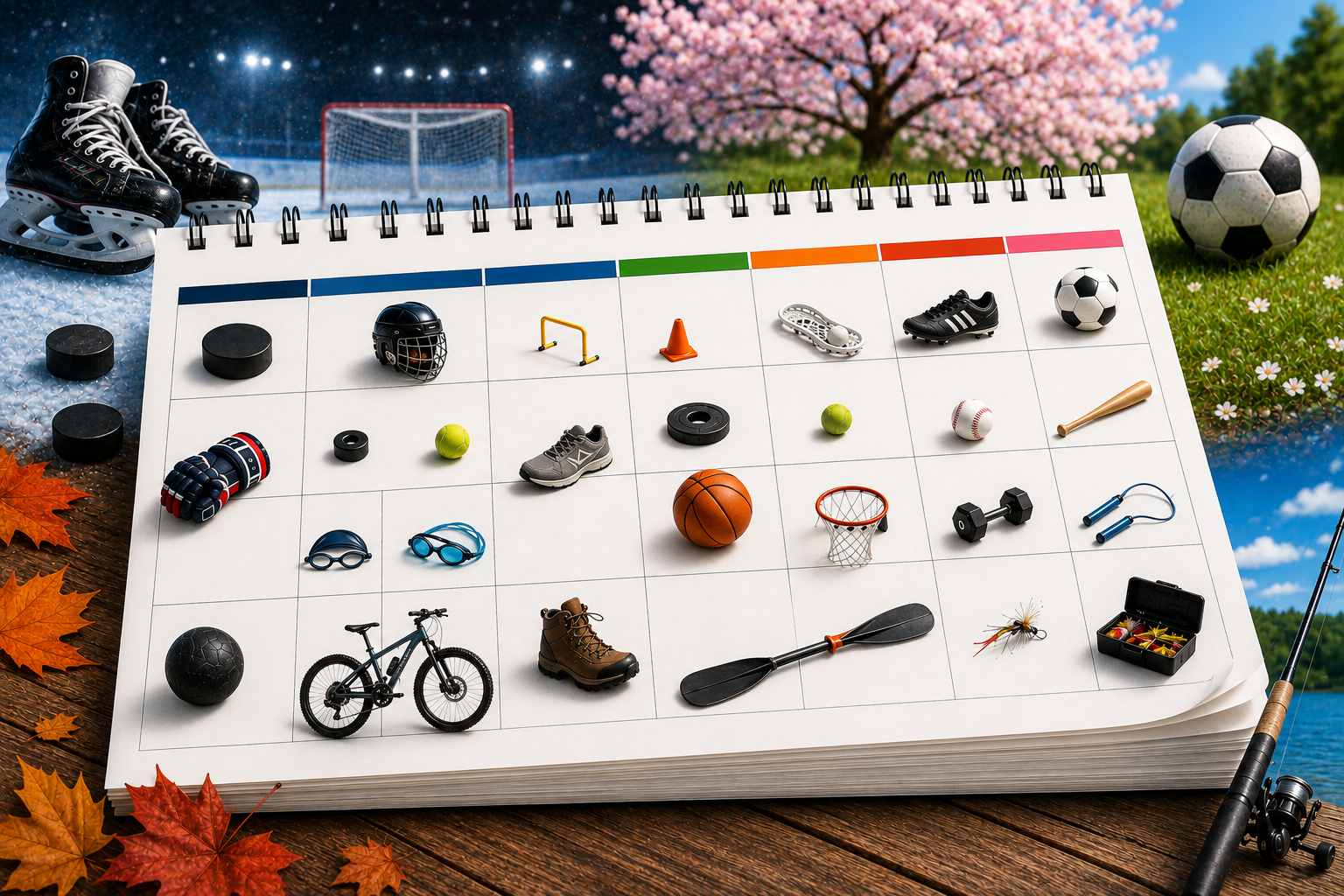
Hockey has spring hockey, summer hockey, camps, clinics and private development.
Soccer stretches farther across the calendar.
Baseball has fall ball, club programs and travel teams.
Basketball has club and AAU opportunities.
Every individual offering can be completely worthwhile.
I provide some of them myself.
But collectively, we've created something different.
Sports aren't just competing against each other for athletes anymore.
They're competing for the calendar.
And there's an obvious business component to that.
More months can mean more registrations, camps, lessons, tournaments, facility rentals, equipment purchases and coaching opportunities.
Again, I'm part of that ecosystem.
The more kids who want additional hockey development, the better that is for my business.
But being part of it also means I should be willing to ask whether every opportunity we can provide is something a child actually needs.
More hockey isn't automatically better hockey.
Opportunity Versus Obligation
I don't think spring hockey is bad.
I don't think summer soccer is bad.
I don't think fall baseball is bad.
And I certainly don't think there's anything wrong with a kid who absolutely loves hockey wanting to skate in July.
There is, however, a difference between opportunity and obligation.
A kid choosing hockey in June because he can't wait to get back on the ice is one thing.
A kid believing he has to play hockey in June because someone else might take his spot is something entirely different.
That's where fear enters the development model.
If we don't do this, will my kid fall behind?
If we play baseball this spring, will someone else get his hockey spot?
If she misses the summer program, will the coach think she isn't committed?
Nobody necessarily has to tell a family they must specialize.
The calendar and the fear can do it for us.
And once one sport expands its footprint, the others have reason to do the same.
Hockey wants spring. Soccer wants another month. Baseball wants fall. Basketball wants summer.
Eventually nobody has to officially eliminate the multisport athlete.
We just make the calendar impossible for one to exist.
There Isn't One Villain
I don't think coaches ruined the multisport athlete.
I don't think parents did either.
And I don't think private development businesses or club programs did it by themselves.
There are too many reasons families choose what they choose.
Sometimes it's fear of losing a roster spot. Sometimes it's the sport a parent grew up playing and understands. Sometimes it's where the child's friends are. Sometimes it's the quality of the coach or program.
Sometimes it's cost.
Sometimes it's choosing the practice that's 15 minutes away instead of the one that's 45 minutes away.
And sometimes a kid simply loves one sport significantly more than everything else.
That's okay too.
Eventually there does come a time when serious athletes have to make choices.
I had to.
There are only so many weekends. As the level increases, so do the demands. Eventually hockey became my primary sport and the other sports became secondary to that pursuit.
I don't think specialization itself is the enemy.
The question is when and why it happens.
There is a huge developmental runway between a seven-year-old trying everything and a teenager deciding what he or she genuinely wants to pursue.
Maybe our job isn't to prevent that kid from ever choosing.
Maybe it's to make sure we don't make the choice for them too early.
What Did We Lose?
Brent's question has stayed with me because the irony isn't lost on me.
Two guys who eventually played hockey beyond the youth level spent their summers playing soccer together.
We weren't worried that soccer was stealing development from hockey.
We didn't think we were falling behind.
We were playing with our buddies.
Eventually the calendar narrowed. Eventually the level demanded more. Eventually hockey became the primary pursuit.
But we had years to become athletes before being asked to become specialists.
Maybe that's what has changed most.
We used to develop athletes and eventually discover which sport they would specialize in.
Today, sometimes it feels like we choose the sport first and try to develop the athlete inside of it.
Youth sports haven't lost opportunities. If anything, kids have more opportunities than we've ever been able to provide.
What we've lost might simply be the space between them.
The chance to put one piece of equipment away and pick up another.
The chance to miss a sport.
The chance to discover something else you're good at.
The chance to choose soccer because that's where your buddies are.
The chance to develop without realizing you're developing.
Eventually every serious athlete reaches a bottleneck. Eventually choices have to be made.
But do we really need the bottleneck to arrive so early?
Maybe the multisport athlete didn't disappear because kids stopped wanting to play multiple sports.
Maybe we built a 12-month youth sports calendar that stopped giving them the chance. 🏒
About the Author
Darrell Hay is a former professional hockey player, hockey director, coach and owner of DHHD.
He feels incredibly fortunate to have grown up in Kamloops, B.C., where the outdoors became part of his athletic development.
Some of his favorite summers included the August long weekend soccer tournament, sipping beers with Brent in the MacArthur Island beer garden after Bugaboo Creek pulled off another win.
Others meant playing cowboy at the Kamloops Outdoor Pro Rodeo or trying to drop a waterski in front of Lot 29 at Scotch Creek, catching an edge and ending up in the waters of Shuswap Lake while Uncle Gerry circled the boat around for an opportunity at another rep.
There were soccer fields, baseball diamonds, golf courses, mountain bikes, lakes and mountains.
Hockey wasn't always being played, but an athlete was always being built. Looking back, the Interior of B.C. was one big playground for getting better at hockey.
